
BEIJING, May 24, 2026, 05:03 (China Standard Time)
Fresh satellite images spotlighting a sprawling construction zone southwest of Beijing—flagged once more this week by Futura-Sciences—are prompting another round of scrutiny from Western analysts and officials. They see the site as a possible future Chinese wartime command hub. So far, Beijing has not acknowledged the project’s military nature.
China’s expanding military outlays are forcing new budget calls in Taiwan. The mainland is set to boost defense spending by roughly 7% in 2026. On Saturday, hundreds turned out in Taipei after lawmakers trimmed sections of a $40 billion defense bill, which had earmarked funds for U.S. weapons and domestically produced drones.
The U.S. Defense Department’s new China military report finds the People’s Liberation Army remains on track for its 2027 targets—including fighting over Taiwan and working to “counterbalance” the United States in nuclear and other high-stakes arenas. That “counterbalance” boils down to developing forces capable of deterring or constraining U.S. moves in a crisis. U.S. Department of War
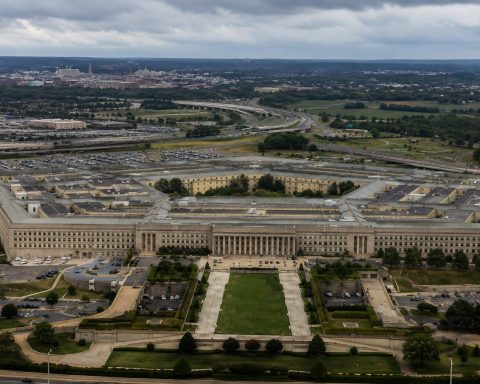
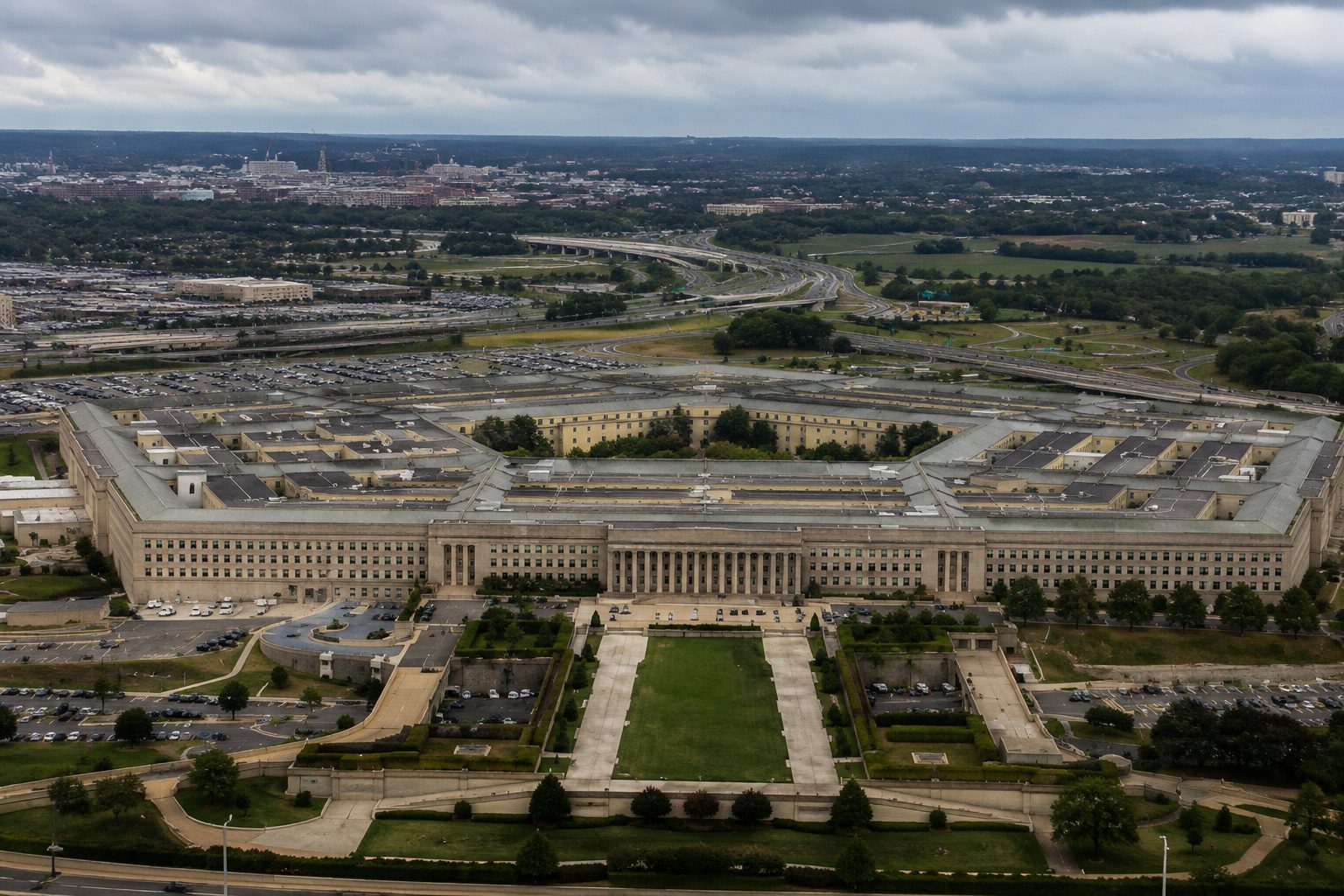
Last year, the Financial Times cited U.S. intelligence analysis of satellite images, pointing to a 1,500-acre site about 30 km southwest of Beijing. The location, marked by deep excavations, was flagged by military analysts as likely containing reinforced underground bunkers—designed to withstand direct strikes. According to U.S. officials speaking to the FT, the complex could surpass anything currently in service, potentially becoming the world’s biggest military command center, and more than 10 times the size of the Pentagon.
Business Insider published Maxar satellite photos revealing swift construction at the location during February and March 2025. According to the report, locals referred to the zone as “Beijing Military City,” but the images didn’t capture any overt military activity. Business Insider
According to Renny Babiarz, who previously worked as an imagery analyst at the U.S. National Geospatial-Intelligence Agency, satellite shots revealed more than 100 cranes operating over roughly five square kilometers. Babiarz, currently vice-president for analysis and operations at AllSource Analysis, pointed to signs of “several possible underground facilities” that appear to be linked by “possible underground passageways,” as he explained to the FT. Financial Times
If this project turns out to be a command-and-control hub, it’s designed to maintain commanders’ ability to stay connected, get updates, and send orders during a serious conflict. The Pentagon’s China report notes that the PLA’s Central Theater Command handles defense for Beijing and the country’s leadership, and also acts as a backup force for the other theater commands.
Dennis Wilder, who previously led China analysis at the CIA and is now a senior fellow at Georgetown University, said confirmation of the site would highlight Beijing’s push for a “world-class conventional force” and, crucially, “an advanced nuclear warfighting capability.” Financial Times
China’s embassy in Washington told the FT it didn’t have details, reiterating Beijing’s stance on peaceful development and its defensive defence policy. Chinese officials regularly describe military modernization as necessary for safeguarding sovereignty and national security.
The site in question appears as tensions over nuclear capabilities simmer. According to the U.S. Defense Department, China’s nuclear warhead count stayed in the low 600s through 2024. Still, the PLA is projected to surpass 1,000 warheads by 2030.
The Pentagon analogy here refers mostly to size, not to established function. For years, analysts have pointed to the older Western Hills facility outside Beijing as China’s hardened command hub. Now, according to Anadolu Agency citing the FT, the new complex is expected to take over as the primary wartime command center—if U.S. analysts have it right.
Satellite images, though, are open to interpretation. Hsu Yen-chi, a researcher with the Council on Strategic and Wargaming Studies in Taipei, pointed out to the FT that while the site covers more ground than a typical military camp or school, it might just as well be housing an administrative body or a sprawling training site. So, the ambiguity is a double-edged sword: downplaying what’s happening could mean overlooking a real evolution in China’s approach to command survivability; play it up, and it could stir yet another cycle of military posturing in a region already on edge.