
WASHINGTON, May 23, 2026, 15:02 EDT
- NASA’s Black Marble maps reveal that while global nighttime radiance increased between 2014 and 2022, significant areas actually saw reduced brightness.
- It’s not just about expanding cities. After dark, war, energy policy shifts, LED adoption, gas flaring, even blackouts all leave their mark.
- Scientists caution that the same satellite record might misinterpret certain types of modern lighting—particularly LEDs that emit more blue light.
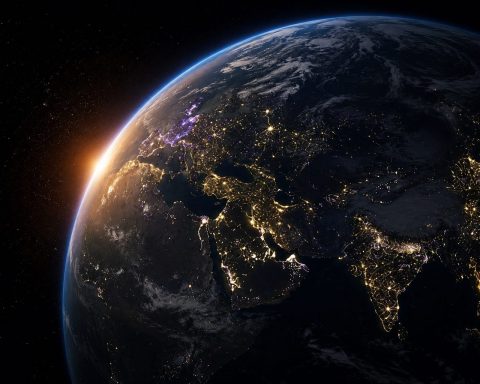
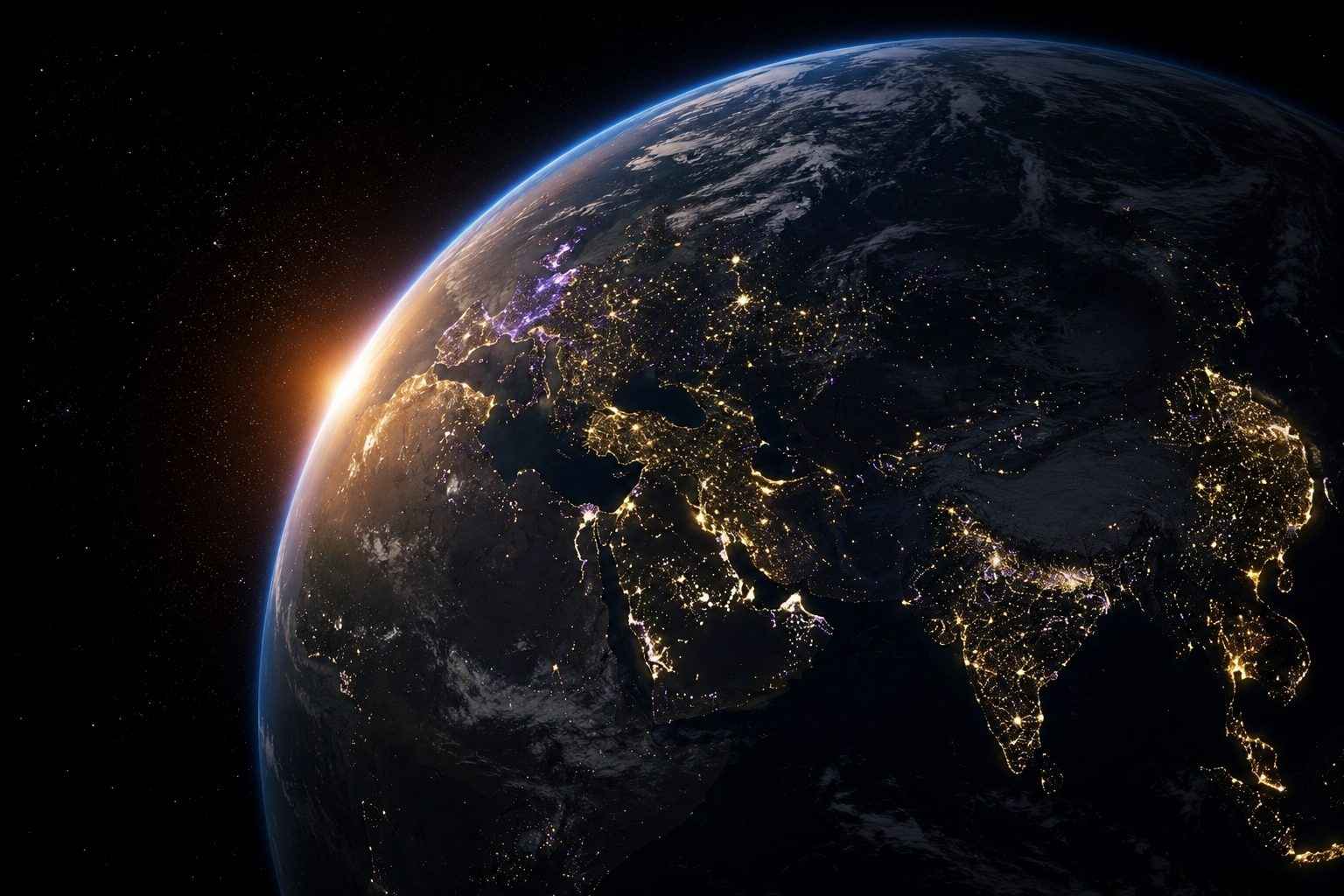
NASA’s updated satellite maps are putting an odd split in Earth’s nighttime glow into focus: the planet’s getting brighter as a whole, but a lot of settled regions are fading. The latest Black Marble images, released this week, pick up new swathes of illumination over China, northern India, stretches of Southeast Asia, and pieces of sub-Saharan Africa. Meanwhile, Europe, the U.S. East Coast, and countries hit by conflict are losing shine.
That’s relevant right now, since these maps make artificial nighttime light a kind of stand-in for shifts in economies, power supply, and policy. NASA Earth Observatory’s May 15 image release has thrown a fresh spotlight on a Nature study that analyzed how night lights changed from 2014 to 2022, using satellite data to track the spread, decline, or disturbance of human activity.
Researchers reported a 34% jump in global radiance — that’s light intensity as measured by the sensor — due to brightening. Dimming, though, clawed back 18% of that, so the net increase is there, but the trend isn’t just a steady climb. Over nine years, each altered spot shifted location an average of 6.6 times, the study found. Night lights now react not only to gradual urban expansion, but also to sudden shocks.
Researchers tapped NASA’s Black Marble product for this work. It leverages the Visible Infrared Imaging Radiometer Suite (VIIRS) sensor, carried on the Suomi NPP, NOAA-20, and NOAA-21 satellites. VIIRS picks up low-light signals—meaning it can spot activity on Earth’s surface after dark. Black Marble then strips out moonlight, cloud cover, terrain, and other background noise to better capture artificial lighting.
NASA reported that a research team headed by Tian Li and Zhe Zhu at the University of Connecticut sifted through 1.16 million satellite images, all snapped at about 1:30 a.m. local time, covering a nine-year span. The night imagery, according to Miguel Román—deputy director for atmospheres and data systems at NASA’s Goddard Space Flight Center—offers much broader insights: “Earth at night has so much to teach us.” NASA Science
The data spans multiple regions. NASA flagged big jumps for China and northern India, with urban growth driving the surge. France logged a 33% drop, while the UK reported a 22% decline and the Netherlands fell 21%. In 2022, Europe’s brightness took a hit during the energy crisis triggered by Russia’s invasion of Ukraine.
The U.S. saw a mixed trend. Cities along the West Coast shone brighter alongside population gains, but much of the East Coast got dimmer—researchers connected that to the rollout of energy-saving LEDs and shifts in the region’s economy. NASA highlighted marked gas flaring in oil-rich areas, singling out the Permian Basin in Texas and North Dakota’s Bakken Formation. Flaring, in this context, refers to burning surplus gas at oil well sites.
Deborah Gordon, a methane specialist with the Rocky Mountain Institute and not connected to the research, said public night-light imagery can reveal wasted gas and point operators, investors, or insurers straight to active flaring sites. She described open access to this information as “huge” for both energy and environmental security. NASA Science
The rivalry here isn’t really about companies—it comes down to the data systems themselves. Nature reported that legacy night-light sources like Defense Meteorological Satellite Program images and previous VIIRS composites worked for capturing general patterns, but they tended to smooth over rapid changes. With the daily Black Marble dataset, however, the team was able to spot sudden disruptions: construction activity, disasters, blackouts, even conflict-related destruction.
The numbers don’t tell the whole story. A city that dims on satellite images might reflect smarter lighting rules, a move to cheaper LEDs, or it could point to blackout, war damage, or even economic breakdown. Christopher Kyba, who studies night-time lights at Ruhr University Bochum and helped write the study, noted to Space.com that street upgrades—like switching from old sodium bulbs to white LEDs—can actually make the area look darker from space. That’s because VIIRS sensors miss a lot of blue light that’s visible to the human eye.
Even so, these maps offer researchers and officials a unique look at nighttime human activity. NASA’s Scientific Visualization Studio put out animations: gold signals spots that lit up, purple marks those that faded, white highlights places where both trends appeared. The visuals back up Zhu’s view of the data as the planet’s “heartbeat.” NASA Scientific Visualization Studio