
STARBASE, Texas, May 23, 2026, 15:03 CDT
- SpaceX’s revamped Starship V3 ticked off most of its big test objectives on Friday, delivering new operational data for Elon Musk’s company just days after its public IPO filing.
- The offering might bring in roughly $75 billion, with a valuation pegged anywhere from $1.75 trillion up to almost $2 trillion. That would make it potentially the biggest IPO ever.
- There’s profitable cash rolling in from Starlink, but investors face tough questions: AI is burning money, Musk keeps a tight grip on votes, and Starship brings plenty of execution risk.
SpaceX’s revamped Starship rocket pulled off a mostly successful test flight Friday, giving Elon Musk’s company some momentum just days after it revealed financials in preparation for what might end up being the largest IPO ever. Initial public offering, or IPO, refers to a company selling shares to public investors for the first time.
Timing is key here. SpaceX is pitching Wall Street on more than rockets and Starlink; the company’s aiming well beyond, into AI, orbital data centers, even markets that don’t exist yet, way out in deep space. With the public filing, investors now have numbers to pick apart—real figures behind the ambition.
Deal from Bloomberg was already pressing on which banks were structuring the deal, how much sway Musk really has, and what the critical numbers looked like. Now, the prospectus has cleared up parts of that. On Friday, investors got a real-time look at the tech backing the valuation with the flight.
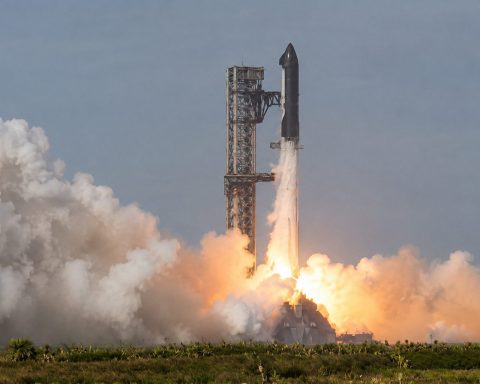
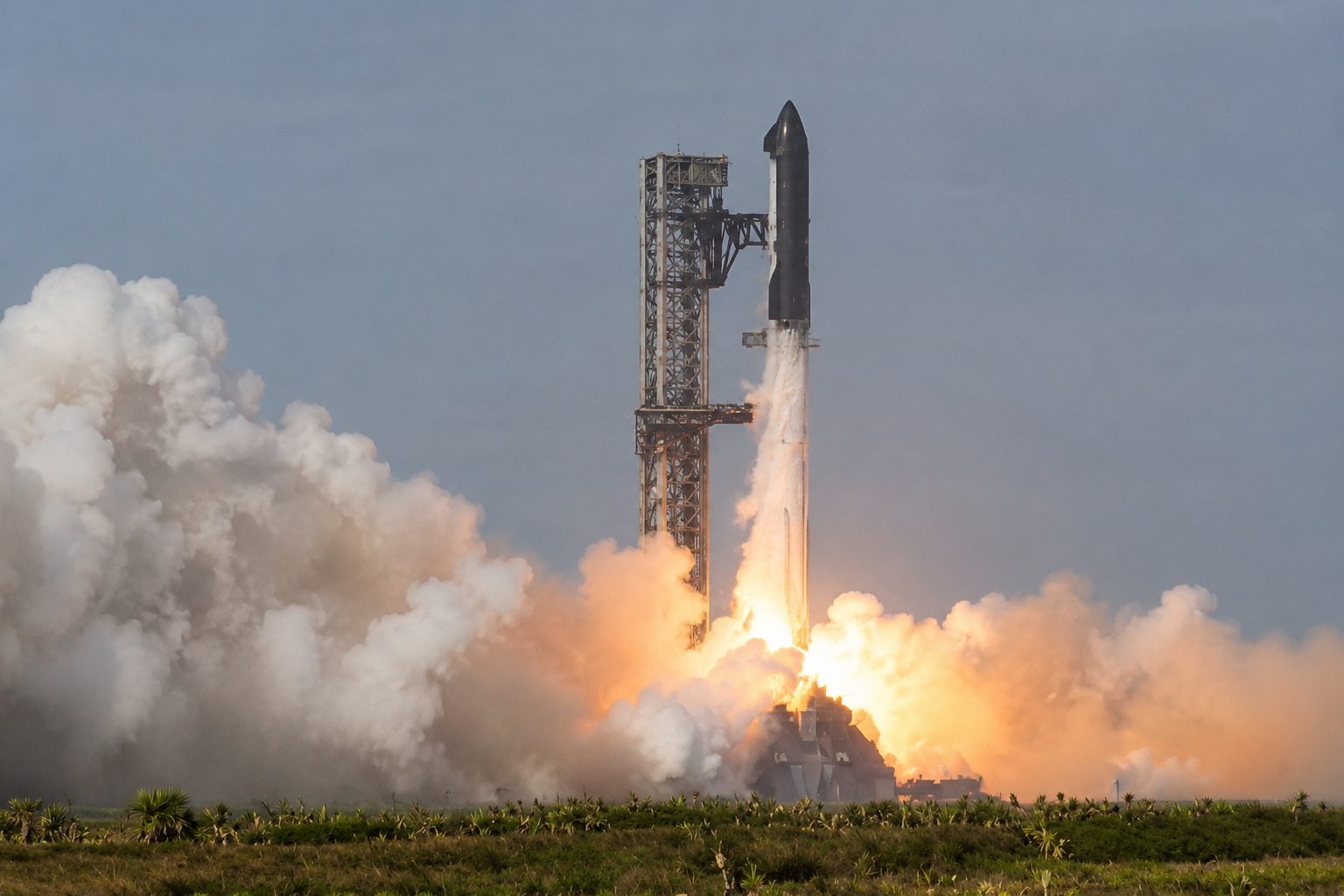
SpaceX’s Starship left the pad at Starbase, near Brownsville, around 5:30 p.m. CT on Friday. After a clean stage separation, the rocket deployed 20 dummy Starlink satellites, then splashed down in the Indian Ocean a little over an hour later. One of Starship’s engines went out during flight, and the Super Heavy booster skipped its planned boost-back maneuver.
Musk labeled the first V3 launch and landing “epic.” Georgetown University’s Center for Security and Emerging Technology research analyst Kathleen Curlee described the flight to Reuters as a “meaningful step forward.” Still, she pointed out, the anomalies from the launch are likely to give SpaceX engineers more work to do. Reuters
The filing lays out just how much more is riding on this launch than hype alone. Starlink, SpaceX’s connectivity unit, was the only division to turn a profit in the first quarter, generating $1.19 billion in operating profit. SpaceX as a whole saw an operating loss of $1.94 billion on $4.69 billion in revenue. The AI business? It posted a steeper $2.47 billion loss on just $818 million in revenue, according to Reuters, citing the filing.
SpaceX pulled in $18.7 billion in consolidated revenue for 2025, according to the S-1 filing seen by Fortune. Starlink drove $11.4 billion of that total. The company also logged an operating loss of $2.6 billion as Starship’s R&D expenses weighed on the bottom line.
SpaceX is sticking with a dual-class share setup—public buyers get Class A shares, each worth a single vote. Class B shares, on the other hand, come with 10 votes apiece. According to Reuters, the filing puts Elon Musk in control of 85.1% of total voting power.
Investors get a stake in one of the most powerful private firms around, though their influence over its founder remains minimal. “There is somewhat of a halo effect,” Georgetown finance professor Reena Aggarwal told Reuters, noting SpaceX’s lack of a direct valuation peer group. Reuters
Shockwaves from the deal hit the sector fast. On Thursday, Reuters said shares of Eutelsat and OHB climbed after SpaceX’s filing, with investors eyeing a fresh valuation for publicly traded satellite and space stocks. OHB CEO Marco Fuchs told Reuters, “big IPOs are good for the market.” ODDO BHF’s Stéphane Beyazian noted that certain investors are seeking more exposure to this space. Reuters
When it comes to lunar work, Blue Origin stands out as the nearer comp. NASA is funding lander projects from both SpaceX and Jeff Bezos’ Blue Origin for Artemis. According to AP, the companies are locked in a race for the first landing; SpaceX’s Starship is still in tests, while Blue Moon from Blue Origin hasn’t made its debut yet.
There’s no mystery about the risks. Starship hasn’t demonstrated full reusability or in-space refueling yet, and steady launch tempos remain unproven. Friday’s test flight brought its own set of engine and booster setbacks. On top of that, investors have to figure out how to price markets SpaceX is pitching—like off-planet manufacturing and space-based AI computing—even though those businesses don’t actually exist yet.
Shares haven’t started trading yet. SpaceX is planning to go public on Nasdaq and Nasdaq Texas, using the ticker “SPCX.” Bookrunners, according to Reuters, are Goldman Sachs, Morgan Stanley, Bank of America, Citigroup, and J.P. Morgan. Reuters