

San Francisco, May 23, 2026, 11:07 PDT
OpenAI is gearing up to submit confidential paperwork for a U.S. IPO in the next few weeks, bringing the ChatGPT developer a step closer to listing in public markets—a move that could gauge just how much investor cash is still flowing into the AI sector. The company is targeting an IPO as soon as September, with Goldman Sachs and Morgan Stanley helping prepare the draft prospectus, Reuters said, citing sources.
The timing here is key: a confidential IPO filing means OpenAI could kick off the regulatory process without immediately revealing its initial financial disclosures. The U.S. Securities and Exchange Commission permits companies to file draft registration statements for nonpublic review, so OpenAI would be able to address regulator feedback before exposing its financials to the market.
OpenAI’s hunger for capital stands out. In March, the company announced it wrapped up a $122 billion funding round, pushing its post-money valuation to $852 billion. It also bumped its revolving credit facility up to roughly $4.7 billion and claimed monthly revenue had reached $2 billion. ChatGPT, according to OpenAI, was seeing over 900 million weekly active users and counted more than 50 million subscribers.
This week, a U.S. jury sided with OpenAI in Elon Musk’s lawsuit, deciding the company didn’t violate its founding mission and ruling Musk’s complaint had come too late. That outcome removed a legal obstacle just as OpenAI eyes a potential IPO—Reuters put the possible valuation at $1 trillion.
“Taking care of that legal overhang cleared the way for an IPO and probably gave OpenAI enough confidence to speed up its plans,” IPOX Vice President Kat Liu said. Liu added that listing close to SpaceX would push portfolio managers to weigh both companies “side by side.” Reuters
OpenAI’s public listing would follow a shake-up in its corporate setup. The nonprofit, now called the OpenAI Foundation, continues to control OpenAI Group PBC—a public benefit corporation—and owns a 26% equity stake. Microsoft sits at about 27%, and the remainder is split among employees and other investors.
The setup might catch regulators’ attention. Musk plans to challenge the jury’s decision, while Reuters pointed out that OpenAI CEO Sam Altman remains under a cloud after witnesses questioned his honesty during the trial. Wedbush’s Dan Ives described the outcome as “a huge win for Altman and OpenAI” but flagged how punishing the proceedings had been. Reuters
Competition has intensified. According to Reuters, OpenAI has already overhauled its product plans twice in the last few months—first reacting to Google’s moves, then pivoting again as Anthropic’s Claude models picked up traction among business clients.
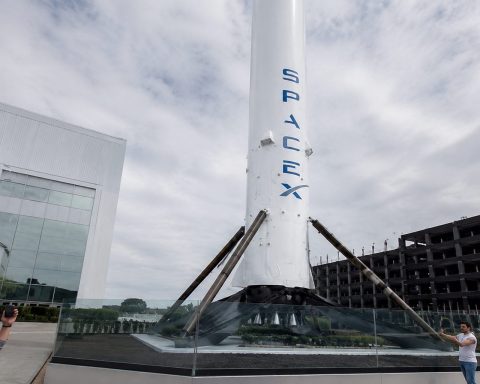
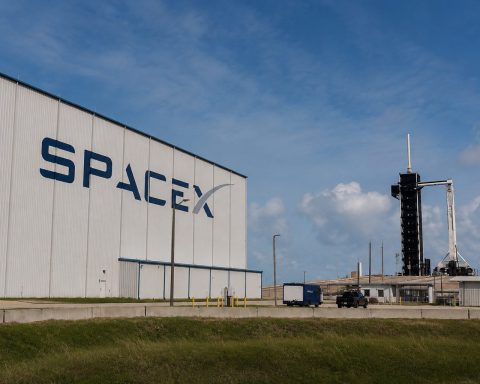
Investor focus quickly shifted to SpaceX this week. Elon Musk’s rocket and satellite operator put in paperwork for an IPO, Reuters said, and the numbers are eye-popping: a possible $1.75 trillion valuation. SpaceX’s first-quarter documents revealed an operating loss of $1.94 billion against $4.69 billion in revenue, with the red ink partially traced to xAI-related expenses.
SpaceX pulled off a mostly successful Starship test flight out of Texas on Friday, sending up dummy satellites and guiding the rocket to a deliberate splashdown in the Indian Ocean. Investors and analysts tracked the flight’s progress, given Starship’s role in SpaceX’s plans for lowering launch costs, boosting Starlink’s reach, and enabling future data centers in orbit.
The biggest wild card for OpenAI: public shareholders might want to see real profit restraint before those heavy infrastructure investments deliver returns. Compute—the chips, data centers, and the electricity to keep AI humming—has been pitched as OpenAI’s edge. In a partnership announcement with Nvidia, Sam Altman put it bluntly: “everything starts with compute.” OpenAI
OpenAI hasn’t announced any specific IPO terms yet. Reuters noted the company didn’t respond right away when asked about potential filing plans. If and when a public prospectus drops, investors will finally get to gauge whether ChatGPT’s reach justifies the expense of pushing ahead in frontier AI.