
WASHINGTON, May 26, 2026, 07:03 EDT
NASA plans a Tuesday press briefing in Washington outlining its Moon Base strategy, spotlighting Blue Origin’s Blue Moon lander and the private-sector equipment required for an astronaut return to the lunar surface. Administrator Jared Isaacman will join top exploration officials to talk through mission details, fresh industry partnerships, and updates on building a lasting foothold near the lunar South Pole.
Timing is key here: Artemis III, originally billed as the next crewed moonshot, has shifted gears. NASA has turned it into an Earth-orbit trial focused on rendezvous and docking — linking up Orion with commercial landers from Blue Origin and SpaceX, maybe both, before going for an actual lunar landing on a future mission.
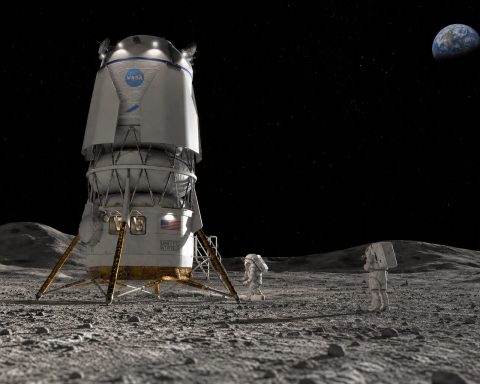
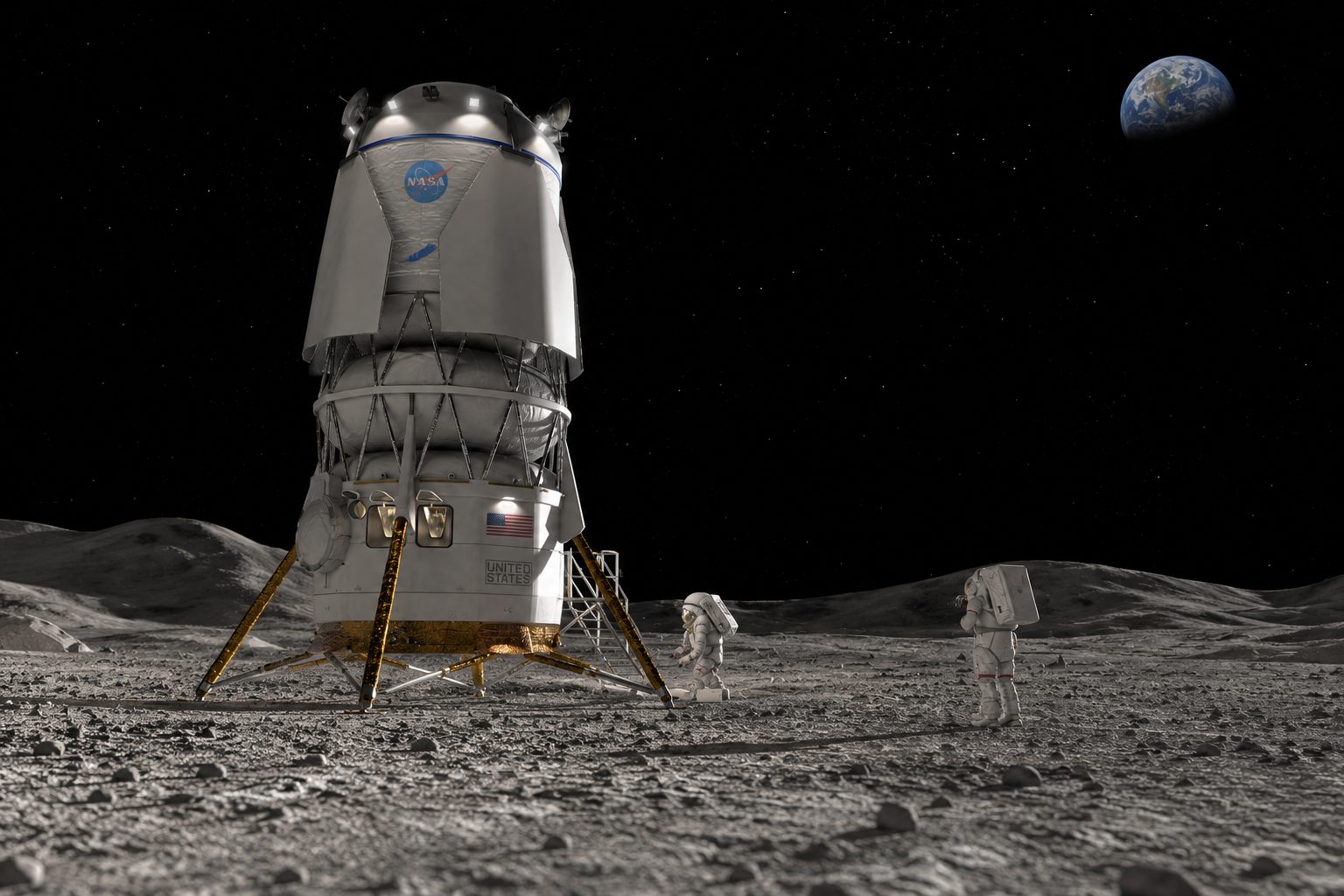
Blue Origin isn’t heading straight to launch just yet—the focus, for now, is on training. NASA confirmed that a full-sized mock-up of Blue Moon Mark 2’s crew cabin, the lunar lander built for human missions, is in use at Houston’s Johnson Space Center. Astronauts and engineers there are running through mission drills, testing out communications, practicing spacesuit checks, and prepping for simulated moonwalks.
Blue Origin now has a front-row seat in NASA’s training process as the agency pushes to convert its revised Artemis timeline into actual hardware tests. “Whichever lander is ready to go, we’ll go with,” NASA’s acting exploration chief Lori Glaze told Scientific American, underscoring how pivotal the Artemis III docking test will be for cutting risks ahead of future lunar landings. She called that demo “absolutely key.” Scientific American
Blue Moon’s design is both smaller and more traditional compared to SpaceX’s Starship-based lander. According to Space.com, Blue Moon Mark 2 will reach roughly 52 feet in height, placing the crew cabin closer to the ground. By contrast, SpaceX’s Starship, which is considerably taller, would need to lower its astronauts to the lunar surface by elevator.
Blue Origin is pushing ahead with a cargo variant. NASA says its Blue Moon Mark 1, called Endurance, wrapped up environmental trials inside a vacuum chamber at Johnson Space Center. The lander is designed to showcase key features for future lunar work: precision landing, cryogenic propulsion using ultra-cold fuels, and fully autonomous navigation.
Blue Origin claims its Mark 1 can haul as much as three metric tons to any location on the moon’s surface. Mark 2, designed for both crew and cargo, is currently under construction, with NASA safety standards baked in from the start. Both models, the company insists, aren’t just one-shot landers like Apollo—they’re pieces of an ongoing lunar logistics network.
NASA wants Blue Origin and SpaceX pushing against each other, not putting all its chips on just one lunar lander. “They both look at this as a competition, and that’s a great thing,” Isaacman told Reuters back in April. Blue Origin’s uncrewed Mark 1 landing attempt, he added, will be “very important” for the whole effort. Reuters
Blue Origin is already funneling resources into its lunar projects. Back in January, Reuters said the company put its New Shepard space-tourism flights on ice for a minimum of two years so it could concentrate on human lunar programs—specifically New Glenn and Blue Moon. CEO Dave Limp acknowledged to staff that the decision to pause wasn’t “one that I take lightly.” Reuters
SpaceX is still the bar to clear—and the main competitor. The company’s Starship V3 managed a near-successful test flight on May 22, sending up mock satellites before hitting a controlled splashdown. Not everything went smoothly: engine and booster issues cropped up. Georgetown analyst Kathleen Curlee described the test as “another meaningful step forward” for SpaceX’s launch plans. Reuters
Still, the lander timetable isn’t airtight. NASA’s inspector general says SpaceX’s Starship has slipped by at least two years since its selection as a moon lander. One big issue: in-space refueling, which remains a major technical hurdle. Blue Origin faces its own test—NASA won’t assign crews until the company proves both its lunar landing and propulsion systems.
The geopolitical race is ticking too. On Sunday, China launched the Shenzhou-23, moving three astronauts up to Tiangong. One is slated to spend a full year in orbit—part of Beijing’s bigger push for a crewed moon landing by 2030. NASA has its sights set on 2028 for putting astronauts back on the lunar surface, aiming to beat China’s timeline by two years.
Nothing’s locked in yet for Artemis III. Crew lineup, mission length, and the target orbit are all still in flux. That was Tuesday’s takeaway: NASA’s shuffled the order, brought on two commercial lander teams, and set up a training mock-up down in Houston. But the hardware? Still lagging behind.