
NEW YORK, May 27, 2026, 06:04 EDT
After SpaceX landed a $2.29 billion contract from the U.S. Space Force and pulled off an improved Starship mission, investors suddenly have solid numbers—and fresh hardware—to crunch ahead of a potentially historic IPO. The conversation now isn’t around whether Elon Musk’s rocket giant has the drive, but if Starlink can ramp up quickly enough to justify the tag.
SpaceX could move ahead with a public listing as soon as June 12, according to Reuters, which also reported the IPO roadshow is set for June 4. FTSE Russell, for its part, noted the company would qualify for immediate inclusion in heavyweight U.S. and global indexes—a move that often attracts cash from funds tied to those indices.
Rohit Kulkarni, managing director at Roth Capital Partners, didn’t mince words in a CNBC segment published May 20: the “biggest question” for SpaceX’s valuation is simple — “how does Starlink scale.” Fast forward a week, and the question is already getting sharper. SpaceX just landed a fresh defense contract, picked up another airline for Starlink, and put Starship through a test flight that, while far from flawless, still provided valuable data. YouTube
The Space Force’s deal revolves around the Space Data Network Backbone—think a dense web of low-Earth-orbit satellites rather than the older, more distant ones, which should translate into snappier data transfer. Space Systems Command wants SpaceX to roll out a fully operational prototype before 2027 wraps up. U.S. Space Force Col. Ryan Frazier described it as “a strong foundation” for military connectivity, keeping weapons and sensors linked up. Space Systems Command
Starlink picked up another key airline client. American Airlines announced plans Tuesday to equip more than 500 of its narrow-body jets with Starlink Wi-Fi, with installations set to kick off in the first quarter of 2027; financial details weren’t shared. Heather Garboden, American’s chief customer officer, said the upgrade will keep passengers connected throughout their flight. Jason Fritch, who leads enterprise sales for Starlink at SpaceX, called it a step toward a “fully connected experience gate to gate.” American Airlines Newsroom
American is the latest to ink a Starlink agreement, joining names like Southwest, United, Alaska Airlines, Singapore Airlines, and Emirates, Reuters said. For investors, airline contracts offer a clearer gauge of Starlink’s expansion than just home broadband—think more aircraft online, additional routes, and a steady build in service revenue.
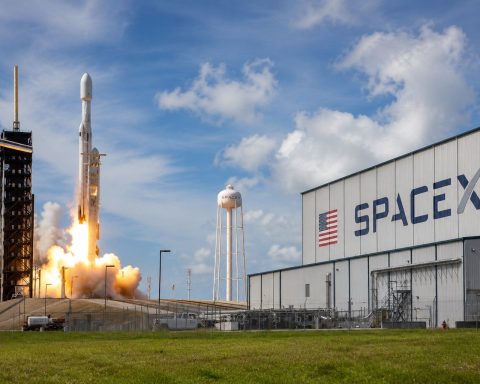
Starship remains the tougher challenge. “Did not need perfection” from the May 22 flight, said SmartTech Research CEO Mark Vena—only signs that the upgraded rocket’s headed in the right direction. Seraphim Space CIO James Bruegger sees “full reusability” as the lever for slashing launch costs. Antoine Grenier at Analysys Mason, though, described the outing as a “lukewarm success.” Reuters
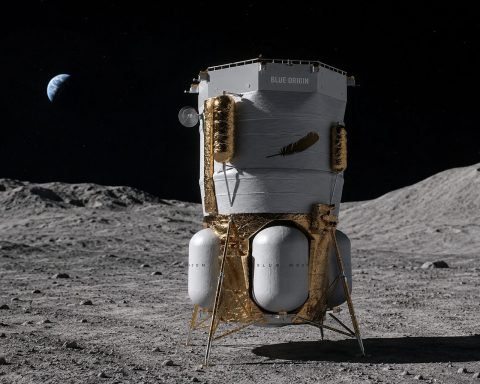
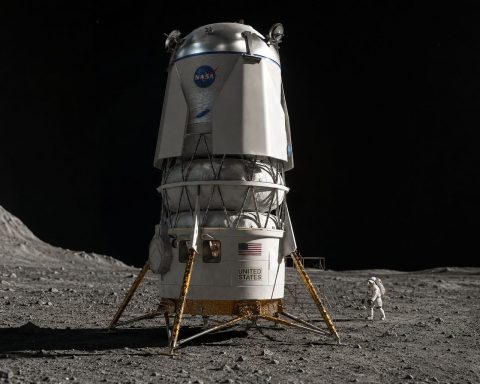
Competition keeps shifting. The European Union is considering new spectrum rules—Starlink and Amazon’s low-Earth-orbit satellites could get a foothold, but most of the future mobile satellite bandwidth would still go to European players. Over in lunar programs, NASA on Tuesday handed Blue Origin a $188 million deal to deliver rovers to the moon. SpaceX, clearly, doesn’t have the field to itself.
The risks here aren’t minor. SpaceX’s IPO filing revealed an operating loss of $1.94 billion for the first quarter on $4.69 billion in revenue, Reuters reported, despite Starlink itself generating an operating profit of $1.19 billion. Losses from the AI division alone came in at $2.47 billion. The worry: if Starship isn’t quickly reusable, or if AI and satellite costs stay elevated, Starlink’s growth might not be enough to offset the drag.
Investors face a straightforward challenge in the weeks ahead, despite the technical trappings. SpaceX brings undeniable scarcity, steady government contracts, and Musk’s habit of delivering on ambitious ideas. But price boils down to something simpler: just how many Starlink subscribers sign up, and how low SpaceX can hold launch costs as it grows the network.