
PASADENA, California, May 31, 2026, 08:02 PDT
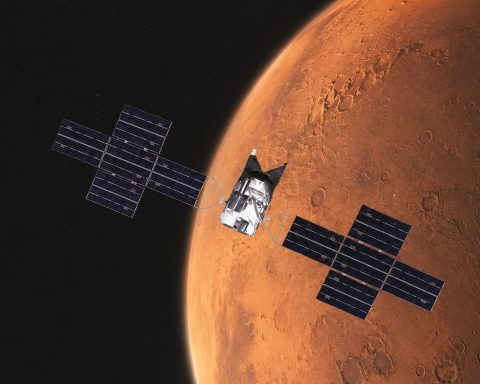
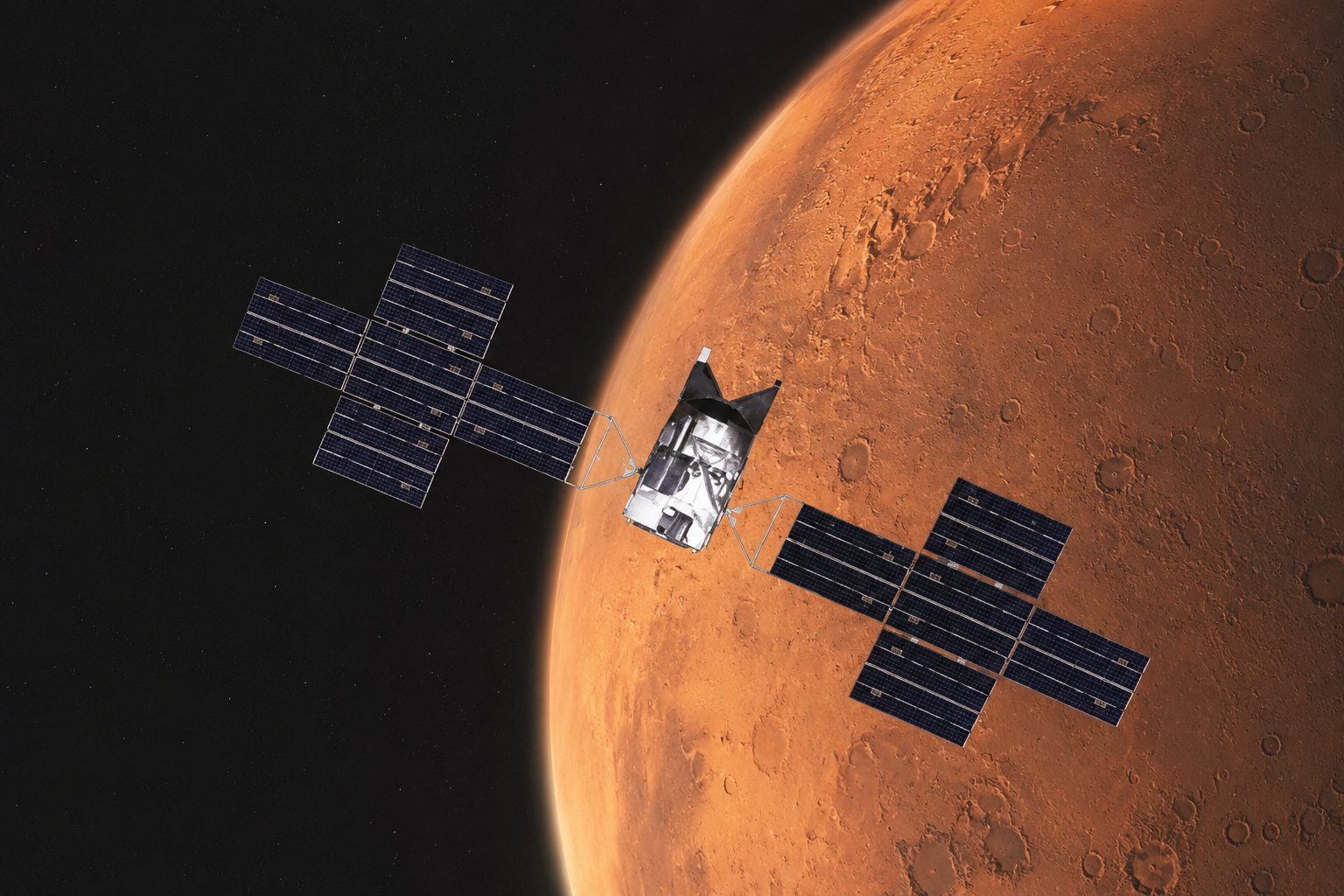
NASA says its Psyche probe is now locked onto its path for a 2029 rendezvous with the metal-rich asteroid Psyche, after snagging a crucial gravity assist from Mars. The maneuver, which occurred May 15, bumped Psyche’s speed by roughly 1,000 miles per hour and nudged its orbital plane by about a degree. Scientists also got a practice run out of the flyby, collecting thousands of images of Mars and checking the spacecraft’s instruments ahead of the main event.
Psyche cleared a crucial mid-cruise navigation test, and did it without tapping its propellant reserves for any course corrections. Gravity assist comes into play here—a tried-and-true method in deep space, where a spacecraft borrows a planet’s gravity and motion to tweak its velocity or direction. The maneuver is technical, but routine for missions like this.
The spacecraft swung just 2,864 miles—4,609 kilometers—above Mars, tapping NASA’s Deep Space Network to lock in its course right after the close pass. “Although we were confident in our calculations and flight plan, monitoring the DSN’s Doppler signal in real time during the flyby was still exciting,” said Don Han, Psyche’s navigation lead at NASA’s Jet Propulsion Laboratory. NASA
Han said the Mars flyby has set the spacecraft “on course for arrival at the asteroid Psyche in summer 2029.” According to NASA’s mission overview, the spacecraft should be captured by the asteroid’s gravity in late July 2029. Science operations start in August and are planned to run for about two years. NASA NASA Science
Psyche’s team fired up its cameras, magnetometers, and the gamma-ray and neutron spectrometer as the spacecraft neared its encounter. NASA described the move as a way to calibrate these instruments using readings from a planet scientists know well—before Psyche heads onward to its much more mysterious target in the asteroid belt between Mars and Jupiter.
Jim Bell, who heads up the Psyche imager instrument at Arizona State University, said the team snapped “thousands of images” showing Mars’ surface and atmosphere. According to Bell, the images are set to calibrate the cameras and put the image-processing tools—destined for the mission’s asteroid leg—through their paces. NASA
The set of images showed off a crescent Mars, a near-complete shot of the planet, the icy south polar cap, and Huygens—a double-ring crater measuring roughly 290 miles (470 kilometers) across. According to NASA, sunlight scattered by Mars’ dusty atmosphere made the crescent not only brighter but also more extended around the disk than anticipated.
NASA is setting its sights on asteroid Psyche, an object that’s unusually metal-rich compared to most, which are typically dominated by rock or ice. The agency believes Psyche could provide an uncommon glimpse at the kind of material that forms the cores of rocky planets—stuff scientists can’t reach beneath Earth’s crust.
Mission leadership comes from Arizona State University, with JPL handling operations and navigation. The spacecraft relies on solar-electric propulsion and is equipped with several instruments: a multispectral imager, a magnetometer, a gamma-ray and neutron spectrometer, plus a gravity investigation that uses radio.
Psyche joins a broader surge in asteroid exploration. NASA’s Lucy mission is currently making its way past both main-belt and Jupiter Trojan asteroids. Elsewhere, after a deep-space maneuver in 2026, the European Space Agency’s Hera probe is on track for a Didymos system meetup before the year ends.
The Mars flyby went off without a hitch, but that alone leaves Psyche’s big question wide open. NASA still needs to nail down whether Psyche is a stripped planetary core or just unmelted rock—answers that hinge on detailed mapping, compositional scans, and gravity readings after the spacecraft settles into orbit.
As it stands, the Mars flyby handed the team not just velocity but proof that their systems can operate in tandem out in space. Gizmodo put it as “more than speed”—and NASA’s data back that up. The maneuver served as a live test for the mission’s navigation, onboard instruments, and image processing—all en route to a destination untouched by any spacecraft. Gizmodo