
Washington, May 30, 2026, 15:02 EDT
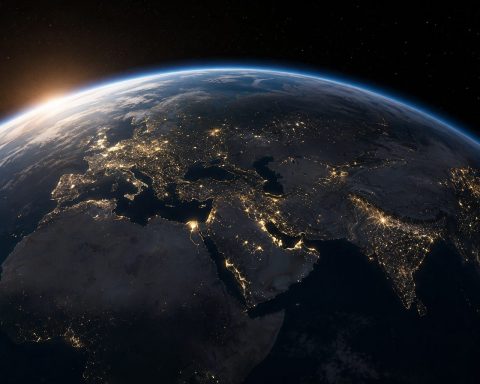
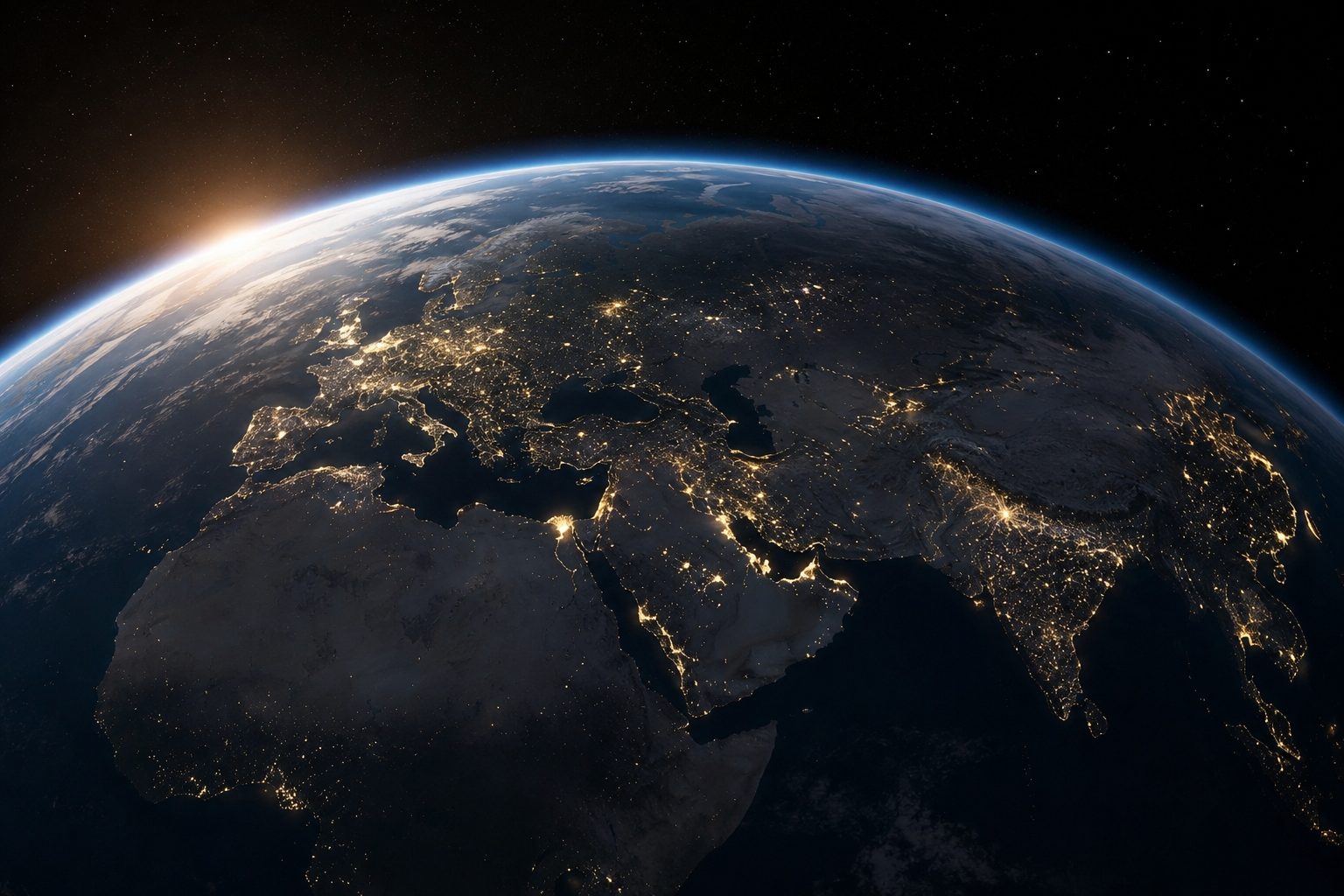
NASA’s most recent Black Marble data reveals a messier reality than the old story about steadily brightening nights: from 2014 through 2022, global nighttime lights spiked, dimmed, shifted—tied to everything from urban growth and conflict to energy infrastructure and government moves. The new images, picked up by Space.com this month, scrap the idea that progress just turns up the world’s nightglow year after year.
Why does it matter now? Night lights have moved beyond eye-catching satellite images. According to NASA, its Black Marble data comes in daily, monthly, and yearly snapshots—with some near-real-time info dropping just three hours after capture. That quick turnaround lets researchers monitor outages, spot light pollution, track illegal fishing, watch for gas flares, or flag damage in conflict zones.
A recent study tracked artificial light at night and came up with a 16% net global rise in nighttime brightness between 2014 and 2022. The planet’s surface saw brightening equivalent to 34% of its 2014 base levels, but 18% got canceled out by areas that dimmed, leaving the world not just brighter overall, but patchier than what earlier yearly maps indicated.
Researchers sifted through 1.16 million daily images captured by VIIRS—the Visible Infrared Imaging Radiometer Suite—aboard Suomi NPP, NOAA-20, and NOAA-21. According to NASA, this instrument, hosted on NASA and NOAA satellites, brings sharper night-light resolution than the older Defense Meteorological Satellite Program and is sensitive enough to detect even faint lights along dark highways.
The U.S. map didn’t follow the expected script this time. According to NASA’s Earth Observatory, population growth lit up West Coast cities, but many spots along the East Coast actually got darker. Researchers pointed to the rise of energy-saving LEDs and changes in the economy as the big drivers. Europe went darker, too—France saw a 33% drop, the UK was down 22%, and the Netherlands fell 21%.
The United States topped the world in total luminosity in 2022, trailed by China, India, Canada and Brazil, according to Reuters. Zhe Zhu, a remote-sensing professor at the University of Connecticut and the study’s senior author, described Earth’s nighttime lights as “highly volatile”—not simply on a steady march upward. Reuters
In poorer and quickly developing regions, the picture shifts. Zhu highlighted that areas like sub-Saharan Africa and Southeast Asia are seeing a “massive expansion of energy access.” The study flagged China and northern India as major sources of increased night radiance, driven by urban growth and more widespread electrification. Reuters
Dimming takes different forms. According to UConn, sharp drops in light were recorded in Ukraine after Russia invaded in 2022, as well as in Syria and Yemen amid extended conflict. Europe’s dimming, meanwhile, often tracks back to policy moves. Zhu described the daily light pattern as society’s “heartbeat”—a pulse that reveals shocks, adaptation, and recovery almost as they happen. UConn Today
The maps caught gas flaring too—oil producers torching surplus gas at U.S. sites like Texas’s Permian Basin and North Dakota’s Bakken Formation. Deborah Gordon, a methane expert with the Rocky Mountain Institute who wasn’t part of the research, didn’t mince words: “Flared gas is money burned.” NASA Science
The maps don’t tell a straightforward story. Lower light levels might point to energy-saving tech or conservation, but they could just as easily flag war, blackouts, or a battered economy. Another hitch: VIIRS sometimes overlooks shifts to blue-heavy LEDs. A 2024 study tapping International Space Station imagery flagged mismatches with VIIRS, blaming the satellite sensor’s weak response to blue wavelengths.
It’s not only astronomers who are affected. Zhu warned that light pollution carries “profound ecological consequences”—it throws off nocturnal wildlife, scrambles migration, and even messes with people’s circadian rhythms. Over in Germany, Christopher Kyba of Ruhr University Bochum called France’s decision to turn off streetlights after hours “extraordinary,” saying it’s something to watch, in case the idea catches on elsewhere. Reuters
For NASA, the key takeaway is this: night images of Earth are now valuable data, not just striking photos. “Earth at night has so much to teach us,” said Miguel Román, deputy director for atmospheres and data systems at NASA Goddard. The satellite perspective, Román says, reveals more than population patterns. NASA Science