
NEW YORK, June 4, 2026, 16:03 EDT
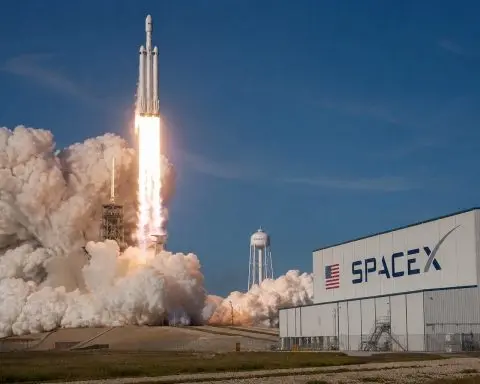
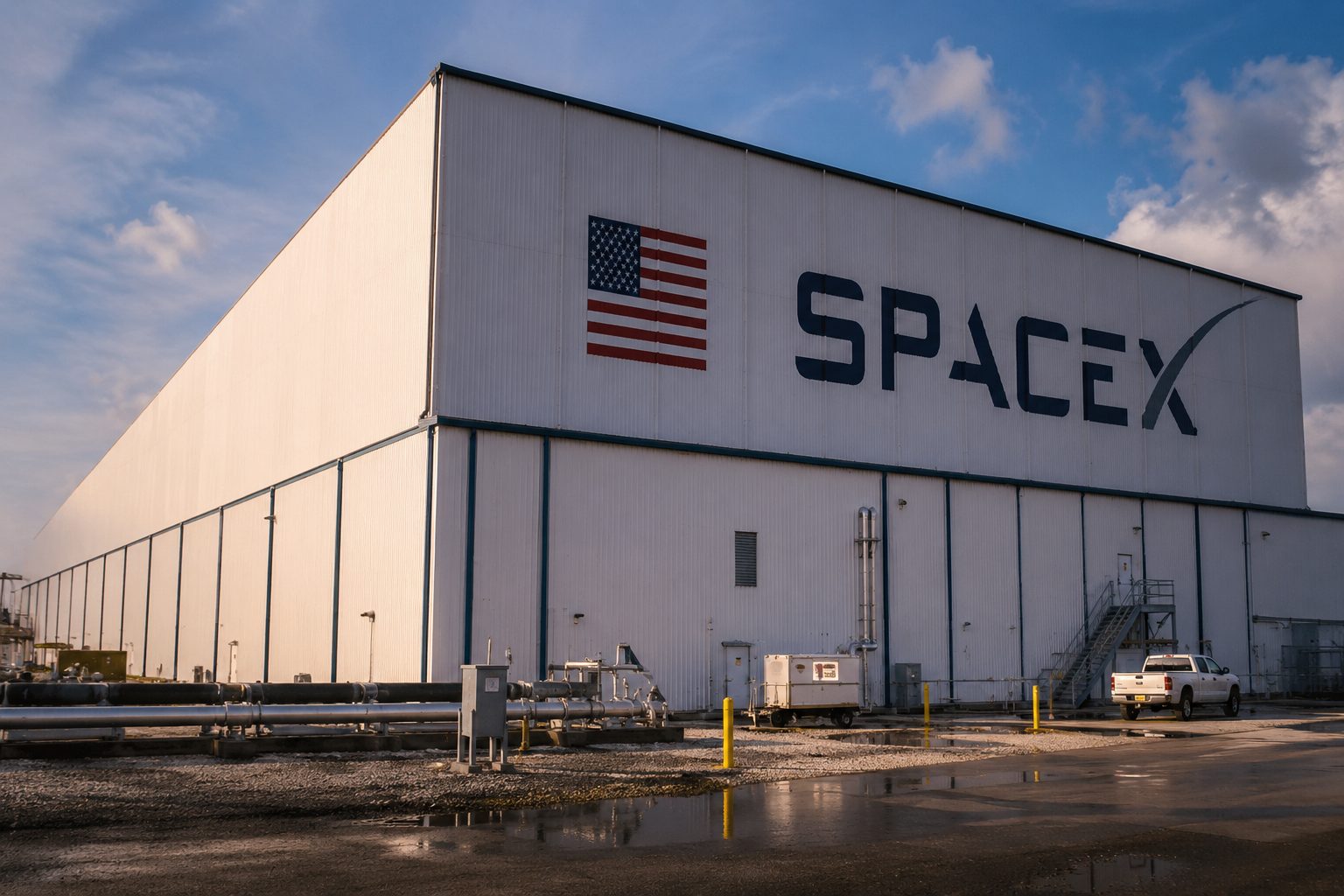
SpaceX’s planned $75 billion initial public offering, a stock-market debut, has pushed a once-loose Tesla-SpaceX merger theory into a more immediate question for Boeing: how much public-market firepower Elon Musk may soon have in aerospace, satellites and artificial intelligence. SpaceX set a $135-a-share price for the listing, aiming for a $1.75 trillion valuation and Nasdaq trading next week, Reuters reported.
That matters now because Boeing is still trying to convert a recovery story into cash, while SpaceX is preparing to sell investors a far broader business than rockets. A public SpaceX would enter markets with a valuation larger than most U.S. industrial companies and a pitch that spans launch, Starlink communications, defense work and artificial intelligence, or AI, meaning software systems that use data to automate tasks and decisions.
Boeing’s position is mixed. The company reported first-quarter revenue of $22.2 billion, a core loss of 20 cents a share and negative free cash flow — cash left after capital spending — of $1.5 billion, even as its backlog, or orders still to be delivered, hit a record $695 billion. “We’re building on our momentum,” Boeing CEO Kelly Ortberg said in April, while adding that the company remained focused on safety and quality. Boeing Investors
The Tesla-SpaceX merger is not a transaction. No deal has been announced. But the speculation has drawn fresh attention since Gene Munster of Deepwater Asset Management and Elon Musk biographer Walter Isaacson floated the idea that the two companies could combine within the next decade; 24/7 Wall St., in the Yahoo-syndicated article, said Boeing could be the company with the clearest exposure if that ever happened.
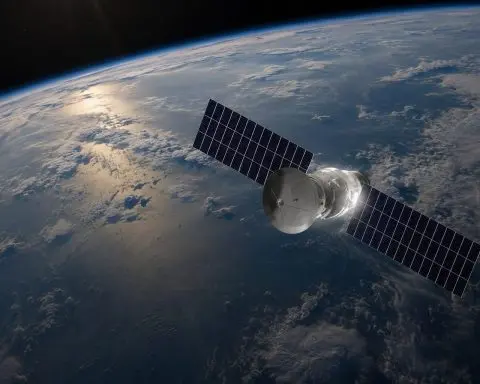
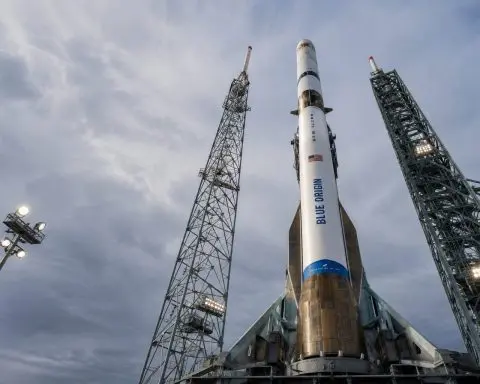
The reason is not Boeing’s main commercial jet business, where Airbus remains the benchmark rival. It is the overlap in space and defense: Starliner against SpaceX’s Dragon capsule, Boeing’s work on NASA’s Space Launch System against Starship, satellites against Starlink, and United Launch Alliance, the launch venture owned by Boeing and Lockheed Martin. A Securities and Exchange Commission filing for ULA’s formation shows Boeing and Lockheed each holding 50%.
That pressure already exists. NASA cut guaranteed Starliner missions last year after a troubled astronaut flight, and Reuters reported that SpaceX’s Dragon had become NASA’s main astronaut ride since 2020. Boeing said at the time it remained committed to Starliner.
Markets were not treating Boeing as a loser on Thursday. Boeing shares were up about 3.6% at $218.19 in late U.S. trading, while Tesla fell about 1.0% to $419.57, according to latest available market data.
Boeing also has a nearer-term lever that has little to do with Musk. Ortberg said last week Boeing was raising 737 output to 47 jets a month from 42 after consulting the Federal Aviation Administration, and aimed to reach 52 a month early next year. “I think the whole world’s watching to make sure we make 47 and 52,” he said. Reuters
Still, SpaceX is pitching investors on more than reusable rockets. Reuters, citing a Financial Times report, said Goldman Sachs expects SpaceX’s AI revenue to rise to $322 billion by 2030 from $3.2 billion in 2025; Reuters said it could not independently confirm the report. The bank is lead underwriter on the offering.
Wedbush analyst Dan Ives has tied the SpaceX IPO directly to Tesla. “We continue to believe that SpaceX and Tesla will eventually merge into one company in 2027,” Ives wrote after SpaceX’s IPO filing, according to Business Insider. He said Musk wanted to “own and control more of the AI ecosystem.” Business Insider
But the risk cuts both ways. Reuters cited Morningstar analysts pegging SpaceX at $780 billion, less than half its IPO target, and warning that the economics of its AI business were unclear given competition from OpenAI and Anthropic. An expensive IPO, a weak debut or regulatory resistance to any Musk-company combination would blunt the threat to Boeing, at least for now.
For Boeing, the immediate fight remains factory discipline, delivery pace and cash. The Musk scenario is still a scenario. Yet SpaceX’s roadshow gives it a price, a timetable and a market test — and that makes the old Boeing-space risk look less abstract.