

WASHINGTON, May 29, 2026, 18:04 EDT
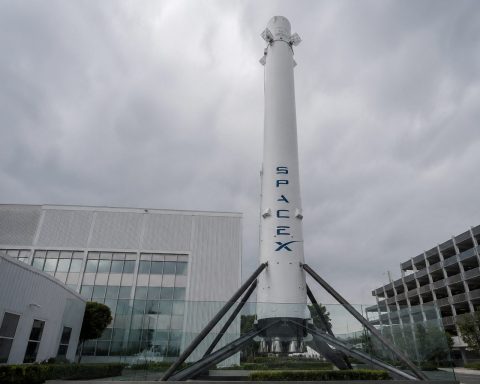
With its $4.16 billion contract from the U.S. Space Force on Friday, SpaceX suddenly spotlighted a challenge satellite companies often downplay: ground-side data systems can matter just as much as the hardware in orbit. The Space Force described the project as an integration of space-based sensors, secure communications, and ground processing for tracking airborne threats.
It’s relevant right now as LEO fleets shift beyond broadband, pushing into areas like military sensing and direct-to-device connections. SpaceNews reporter Ian Clark, writing on May 20, pointed to what’s called a “cardinality wall”—the point where telemetry data from spacecraft, covering everything from health to performance, begins to overwhelm established ground-based databases. Copernical
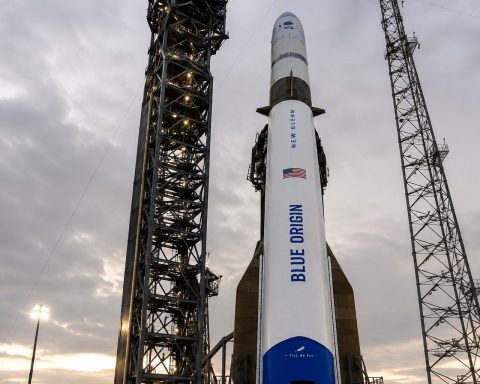
Cape Canaveral delivered a fresh jolt: Blue Origin’s uncrewed New Glenn rocket blew up in a hot-fire test on Thursday. The booster had been slated for its fourth launch, this time loaded with 48 Amazon Leo satellites—Amazon’s next move in the broadband race against Starlink.
The technical bit here isn’t complicated, just tricky in practice. Cardinality—how many unique data combinations a database has to monitor—shoots up fast when you start layering things like satellite ID, battery string, software version, orbit segment, mission phase. In comments to SpaceNews, InfluxData made it clear: simply tweaking the setup won’t keep up once the fleet gets larger.
The scale at Eutelsat OneWeb is massive. According to InfluxData, each of the operator’s LEO satellites spits out over 50,000 unique telemetry readings, with total operations handling upwards of 1 million data points every second and tracking more than 15 million distinct series across the fleet. “You never know what you’ll need to ask tomorrow,” said Dan Kroboth, vice president of LEO satellite operations at Eutelsat OneWeb, describing it as a “mass quantity of data.” InfluxData
Operators face real-world consequences here. A sluggish database means delayed alarms; fragmented telemetry—whether by spacecraft, ground station, or network—forces engineers to match up events rather than address problems. NASA’s May 11 small-spacecraft ground systems chapter points out that mission operations software covers monitoring, command, control, communications, and telemetry tracking throughout a mission.
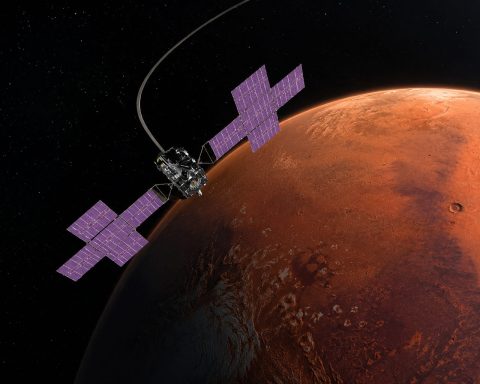
The race isn’t slowing. Eutelsat points out OneWeb is up with over 600 LEO satellites scattered across 12 orbital planes. But Starlink is on another scale—Reuters pegs its fleet near 10,000, controlling more than 60% of all spacecraft currently in orbit, leaving OneWeb and Amazon Leo’s developing networks in the shadow.
The U.S. defense sector keeps pushing the same group of firms further into roles demanding reliability. This week, Reuters noted the Pentagon’s increasing dependence on Starlink has handed SpaceX added clout. Clayton Swope, senior fellow at the Center for Strategic and International Studies, put it this way: SpaceX “certainly has the U.S. government over the barrel.” Reuters
Europe is moving to cut back on similar reliance. On Wednesday, the European Commission announced plans to allocate a significant portion of the 2GHz mobile satellite spectrum specifically for European firms and government use. BNP Paribas Equity Research’s Sam McHugh flagged that such a move could put SpaceX in what he called a “structurally inferior” spot within Europe. Reuters
Still, tackling cardinality issues isn’t just about handling larger cloud costs. Operators face requirements like retaining data for anomaly probes, complying with export-control or sovereign-hosting policies, and pulling queries across all systems in seconds. InfluxData points out that for satellite and communications firms, these pressures often translate into demands for self-managed, private, sovereign, or air-gapped deployments.
This is what makes the SpaceNews piece stand out, even if it reads like backend technicals. With the shift, the LEO battle isn’t just about stacking satellites with every launch—it’s about who’s got the software chops and architecture to actually operate them as a system. Telemetry ends up being the real test of how well a company can command its fleet in orbit.
Operators with the longest launch manifest aren’t necessarily the ones coming out ahead. Spotting a faulty sensor, a problematic modem, or an unusual orbital state before it spirals into a service outage—that’s where the edge may be.