
PASADENA, California, May 28, 2026, 16:09 PDT
- Discovered just days ago, asteroid 2026 JH2 slipped through, passing safely inside the moon’s orbit.
- ESA’s updated close-approach list points to a busier week for small near-Earth objects flying by.
- Experts argue this episode highlights the need for improved surveys, while also exposing gaps in the catalog of smaller objects.
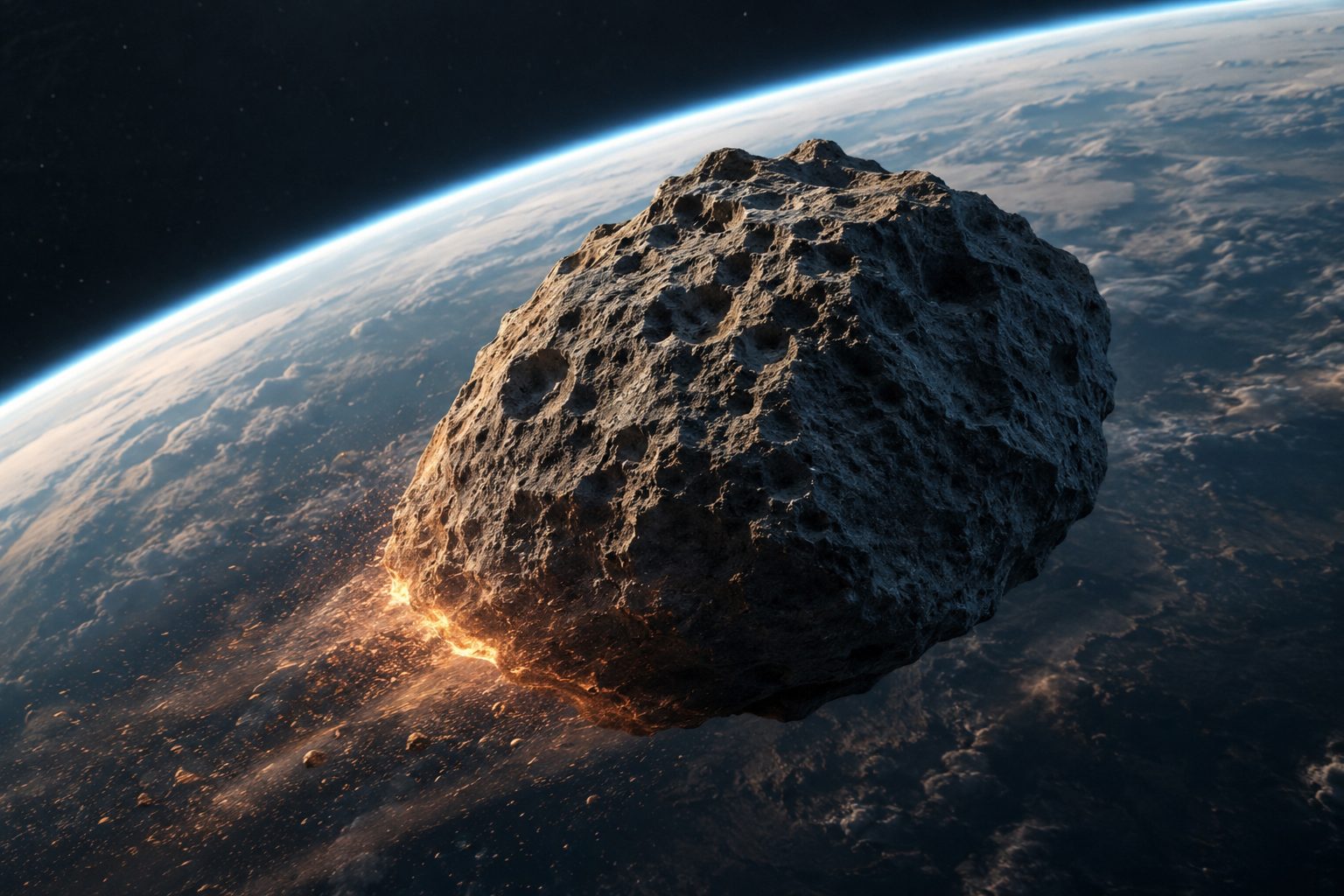
Asteroid 2026 JH2—about the size of a bus—zipped by Earth last week, missing by nearly a quarter the lunar distance. Astronomers had only just caught sight of it days before. According to data connected to NASA/JPL, the pass shaved by at approximately 56,000 miles out, or somewhere between 90,000 and 91,000 kilometers.
Timing is key here—activity hasn’t let up. The European Space Agency’s near-Earth object list, refreshed May 28 at 13:55 UTC, logged asteroid 2026 KT2 swinging by at roughly 782,510 km, or 2.04 times the Earth-moon gap. That same day, 2026 KX1 came through at about 1.59 million km, equal to 4.13 lunar distances.
In the world of space, close asteroid flybys aren’t unusual. Still, 2026 JH2’s size—big enough to be noticed, small enough to evade early detection—highlights why so many objects are spotted late. Astronomers have catalogued just about 1% of near-Earth asteroids this size, according to UCLA planetary scientist Jean-Luc Margot, who called the last-minute discovery “not surprising.” WBAL
The Mount Lemmon Survey, operating just outside Tucson, Arizona, spotted the asteroid on May 10. Observatories in Kansas—Farpoint—and again at Mount Lemmon, Arizona, picked up the tracking after that. Officially classified as an Apollo-class near-Earth object, it follows a solar orbit that both outpaces and intersects Earth’s.
Richard Binzel, the MIT planetary scientist who developed the Torino Scale for measuring impact risk, says there’s no danger from 2026 JH2. “2026JH2 will pass safely by the Earth,” he told reporters. He pointed out that similar car-sized objects actually zip between Earth and the moon about once a week, while bus-sized ones do it a few times per year. MIT News
Nobody’s quite sure of the asteroid’s true size yet. Patrick Michel, an astrophysicist with France’s National Centre for Scientific Research, says optical telescopes only pick up visible brightness, so there’s no telling if 2026 JH2 is “bigger and darker, or smaller and more reflective.” Right now, estimates put its width somewhere between 50 and 100 feet. WBAL
Still, there’s some degree of risk on a bigger scale. Michel described 2026 JH2 as “far enough that there is absolutely nothing to worry about,” though he also acknowledged that projecting future orbits isn’t always straightforward. Margot, meanwhile, highlighted diminished radar capability after Arecibo’s collapse and ongoing fixes at NASA’s Goldstone antenna—both factors, he said, make it tougher to assess impact risk. WBAL
NASA’s working to narrow that gap. The agency’s NEO Surveyor—a unique infrared telescope targeting hazardous asteroids and comets—won’t launch before September 2027. Unlike ground-based telescopes, it should spot dark space rocks that are tough to see in visible light. “One-of-a-kind mission,” said Jim Fanson, project manager at NASA’s Jet Propulsion Laboratory, calling out its focus on finding the riskiest objects for Earth. NASA Science
Asteroid Watch, a dashboard run by NASA/JPL, keeps tabs on asteroids and comets skimming near Earth, logging their size, date, and how close they’ll get. According to JPL, anything bigger than roughly 150 meters and coming within 4.6 million miles—about 19.5 lunar distances—counts as potentially hazardous.
But the real trial arrives in 2029. NASA has confirmed that asteroid Apophis will zip by Earth on April 13 that year, coming as close as 20,000 miles—inside the orbit of many geosynchronous satellites. The agency maintains there’s no risk of Apophis hitting Earth for at least a century.
2026 JH2 ended up missing—straightforward enough. The tougher challenge? Spotting faint objects like this one sooner, not after they’ve already zipped by and turned into a data point from yesterday.