
GREENBELT, Maryland, May 29, 2026, 10:08 (EDT)
- NASA’s Black Marble data reveal a net increase in artificial night lighting across Earth between 2014 and 2022—though the rise isn’t spread evenly.
- From orbit, the data tracks everything from energy access and power failures to conflict damage, gas flaring, and lighting policy.
- Across Europe, the lights faded in several nations. On the flip side, brightness picked up in parts of Asia, some African regions, and sections of the U.S.
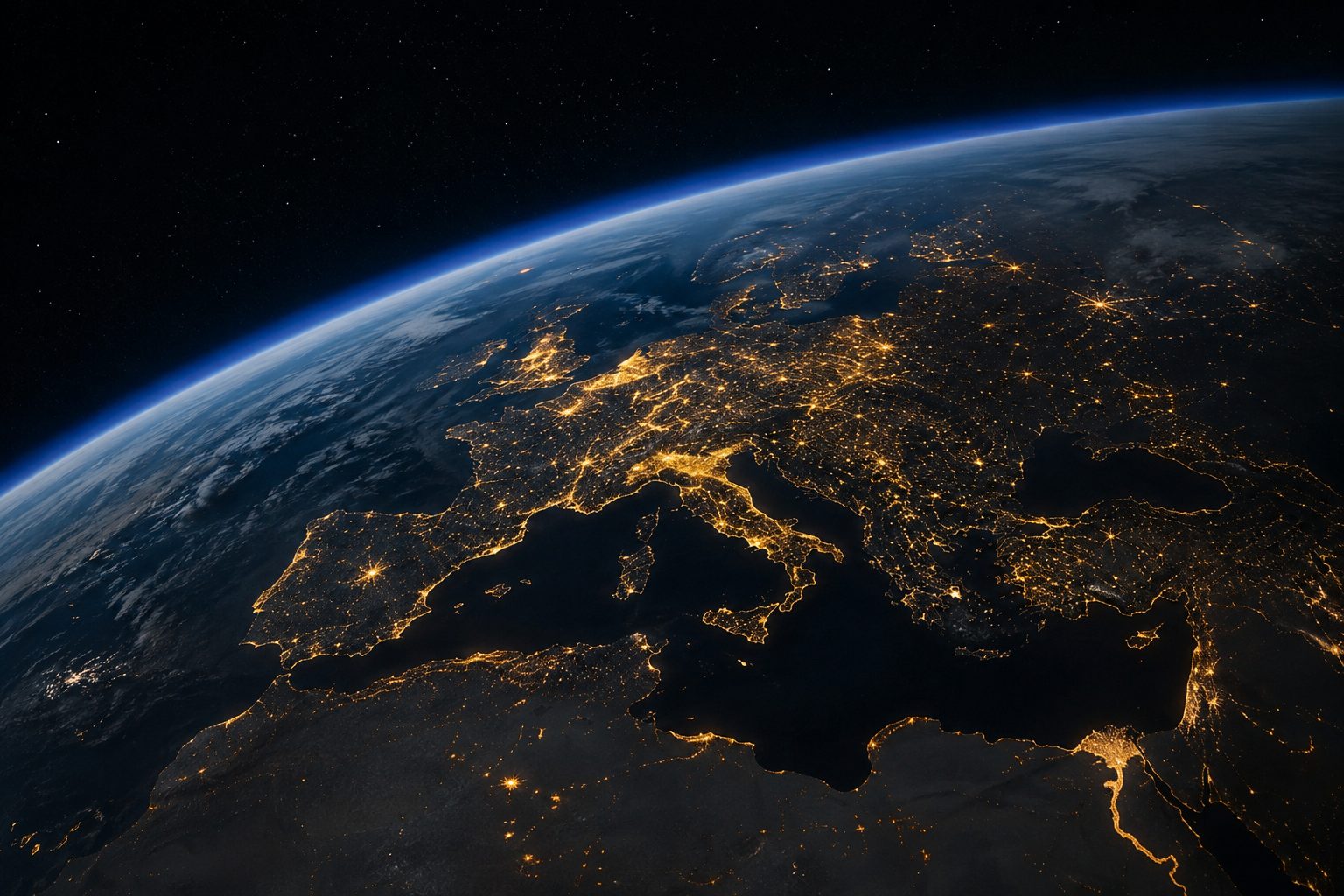
NASA’s latest nighttime imagery reveals Earth’s artificial shine is on the rise, but growth isn’t uniform. Instead, researchers tracking the data are seeing city lights, oil patches, and electrical grids flicker and surge in unpredictable regional bursts—patterns the older satellite archives missed.
This finding has real weight—night lights now pull double duty as more than just a map of population. Researchers lean on these signals for everything from tracking who has power to gauging industrial output, war impacts, blackouts, disaster recovery, and even checking if street-lighting policies actually show up in the data.
Researchers publishing in Nature on April 8 analyzed daily satellite data to chart artificial light at night—light emitted by everything from streetlights and buildings to cars, factories, and gas flares. Their findings: global nighttime radiance rose 16% from 2014 to 2022, as bright spots expanded by an amount equal to 34% of the 2014 level, while reductions in light erased 18%.
NASA’s Black Marble product provided the data, drawing on the Visible Infrared Imaging Radiometer Suite, or VIIRS, aboard the Suomi NPP, NOAA-20, and NOAA-21 satellites. Black Marble generates daily, monthly, and annual night-lights records, screening out interference like moonlight, cloud cover, snow, and some atmospheric noise.
“For decades, we’ve believed the Earth at night keeps getting brighter with population and economic growth,” said Zhe Zhu, a remote-sensing professor at the University of Connecticut and lead author of the study, in an interview with Reuters. But the reality, Zhu said, is more complex: “We discovered that the Earth’s nightscape is actually highly volatile.” Reuters
NASA pointed to sharp gains in brightness across Asia, with China and northern India leading the surge. Electrification and expanded infrastructure brought more light to sub-Saharan Africa and Southeast Asia, regions once much darker. Meanwhile, parts of Europe actually dimmed, a trend tied to energy-saving steps, widespread LED adoption, and stricter rules on light pollution.
Lighting intensity in France plunged 33%, the sharpest fall among countries tracked, with Britain down 22% and the Netherlands 21%, a recent report in The Star said, citing researchers. Germany’s numbers told a different story — some parts saw more light, others less.
The nation painted a divided picture. NASA noted West Coast cities are shining brighter, tracking with population growth, while swaths of the East Coast have gone darker—a trend researchers linked to the rollout of energy-saving LEDs and ongoing economic shifts. Signals from oil and gas territories in the central U.S.—places like Texas’ Permian Basin and North Dakota’s Bakken Formation—came in jumpy, reflecting drilling cycles and the flaring off of surplus gas.
Deborah Gordon, a methane specialist with the Rocky Mountain Institute, wasn’t part of the study but described flaring as “money burned.” She pointed out that public satellite data could give operators, investors, and insurers a clear view of where gas is simply going to waste. NASA Science
But researchers and NASA summaries pointed out sharp declines in night lights over places like Ukraine, Lebanon, Yemen, Afghanistan, Haiti, and Venezuela. The maps showed areas dimming, with the losses attributed to war, power problems, infrastructure failures, or economic turmoil.
Dimming’s a tricky signal without the background. France might be seeing results from policy, but in Venezuela, a Nature study tied a drop of over 26% to a sagging economy, crumbling infrastructure, and dried-up investment.
Rather than stack up against a competitor, the point here is how Black Marble’s daily data stands apart from older night-light records. Global studies in the past would typically use annual or monthly composites. Daily readings from Black Marble, though, capture quick-moving events—power outages, conflict damage, sudden lockdowns, or a newly enforced energy-saving regulation—that older datasets might miss.
Karen Seto, a Yale professor specializing in geography and urbanization science and co-author of the study, argued the results challenge the longtime belief that increasing nighttime lights signal economic expansion. “Historically, economists assumed ‘more light = more GDP.’ Our findings suggest we need to decouple light from growth in certain contexts,” she said. Yale School of the Environment
There’s a danger in reading too much into the images. Nature pointed out that VIIRS picks up mostly upward-facing light after midnight and is tuned to the 500-900 nanometer band, so it can miss lighting from earlier in the evening and certain wavelengths. On-the-ground confirmation remains essential—otherwise, a dark spot could signal anything from a working policy to economic trouble, or just a blackout.
Even so, NASA staff are pitching the technology as much more than just an environmental tracker. “Unlocking energy sector insights is just one way NASA data is advancing national security interests at a critical time,” said Miguel Román, who serves as deputy director for atmospheres and data systems at NASA’s Goddard Space Flight Center, according to NASA’s statement. “Earth at night has so much to teach us.” NASA Science