
HOUSTON, May 23, 2026, 11:02 (CDT)
NASA has added Blue Origin’s Blue Moon Mark 2 crew-cabin trainer to its Artemis toolkit, providing astronauts and engineers with a full-scale mockup to run through key mission steps for a lunar program that’s banking on privately built landers not yet finished. The Mark 2 unit, now up and running at Johnson Space Center’s Space Vehicle Mockup Facility in Houston, is open for both training and equipment testing.
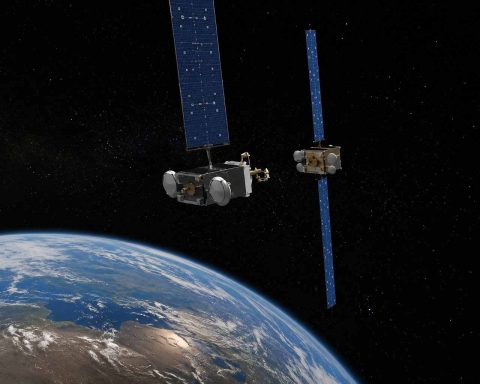
This shift puts Artemis III on track for an Earth-orbit run in 2027, rather than breaking ground as the first U.S. crewed moon landing since Apollo. NASA’s plan: the crew will focus on rendezvous and docking work between Orion and lander prototypes from Blue Origin and SpaceX. That next major lunar touchdown? It’s been pushed to Artemis IV.
NASA plans to share more details on its moon-base blueprint this May 26, pulling back the curtain on additional industry partners and new mission outlines. The agency’s long-term target: a continued human foothold near the lunar south pole. That requires a coordinated push—surface equipment, energy sources, mobility, and astronaut support systems, all working in concert.
The Blue Moon trainer isn’t a full-scale flight unit. According to NASA, the final Blue Moon crew lander will reach about 52 feet in height. The Houston model? Just the crew cabin—over 15 feet tall—positioned near the base of the lander. That’s the space where two astronauts would sleep, eat, run experiments, and look out onto the lunar surface during their stay.
NASA and Blue Origin are set to put people directly inside the cabin for a series of human-in-the-loop evaluations. These will go beyond computer simulations—real participants will run through mission scenarios, test out mission-control comms, check spacesuits, and prep for simulated moonwalks.
“While this is a mission to Earth orbit, it’s still a key stepping stone,” said Jeremy Parsons, a NASA Moon to Mars official, during the agency’s Artemis III update. He described it as “one of the most highly complex missions NASA has undertaken,” citing the challenge of coordinating several spacecraft and private providers in a single launch campaign. NASA
Blue Origin is ramping up factory space as its program advances. On Friday, Florida Governor Ron DeSantis outlined a $600 million boost for the company’s Rocket Park campus at Cape Canaveral. Plans call for an 830,000-square-foot upper-stage manufacturing plant that’s projected to add 500 aerospace jobs. CEO Dave Limp described this as Blue Origin’s “most ambitious chapter” yet in Florida. Reuters
Rivalry is out in the open. NASA chief Jared Isaacman told Reuters back in April that for Blue Origin and SpaceX, the lunar lander contracts are very much a competition—“that’s a great thing,” he said. NASA’s bet is on having both in the mix; relying on two suppliers means if one ship runs late, the lunar program isn’t stalled. Reuters
SpaceX handed NASA new data on Friday after its Starship V3 took off from Texas and wrapped up a mostly successful test, sending out dummy satellites before landing in the Indian Ocean nearly an hour later. “Another meaningful step forward,” said Kathleen Curlee, a research analyst at Georgetown. Still, the flight wasn’t without anomalies. Reuters
The road is hardly smooth. Blue Origin’s New Glenn is stuck on the ground after April’s upper-stage failure, sidelined as the FAA digs into what went wrong. SpaceX, for its part, faces a key technical hurdle: it needs to pull off in-orbit refueling — shuttling ultra-cold propellant from one vessel to another — before Starship can be tapped for a lunar landing.
NASA treats the Houston trainer like a stage for practice, not celebration. What comes next? Proving that Orion, its crew, ground controllers, and privately built lander tech can coordinate in space—only then will the agency give the green light for astronauts to actually descend to the Moon.