
BEIJING, May 31, 2026, 05:03 CST
- Reuters has examined satellite images that reveal China is constructing over 80 launch pads close to nuclear missile silos in the country’s far northwest.
- The finding has heightened worries about Beijing’s push to safeguard its nuclear counterstrike capacity.
- Defense officials are converging in Singapore, with U.S.-China tensions over Taiwan likely to overshadow the discussions as construction gets underway.
China’s expanding a sprawl of launch sites, bunkers, and comms hubs close to its nuclear missile silos out in Xinjiang and Gansu, Reuters said Friday—a fresh indication the land-based side of Beijing’s nuclear arsenal is getting a boost. Analysts point to over 80 pads near the Hami silo field, saying those could host mobile missile units, air-defense gear, or electronic warfare setups.
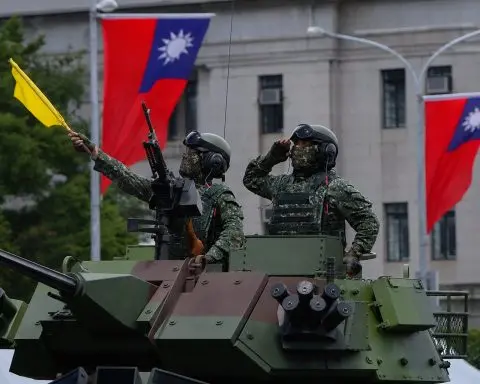
Timing here is key. The report dropped just as defense ministers, top brass, and analysts converged on the Shangri-La Dialogue in Singapore. There, a fresh International Institute for Strategic Studies assessment flagged the risk: if the U.S. and China clash over Taiwan, nuclear escalation could be on the table, since both might go after command and communications nodes at the outset.
Fresh satellite images add detail to previous reports about a different suspected wartime command facility outside Beijing. Earlier this month, Futura pointed to satellite evidence of a massive underground military base near the Chinese capital. The Financial Times, for its part, said last year that U.S. officials saw a site southwest of Beijing—spanning about 1,500 acres—as a potential command hub that could surpass the Pentagon in size.
Security analysts speaking to Reuters said the desert construction signals China is looking to bolster its “second-strike” capability—the capacity to respond to a nuclear attack with its own. China’s traditional approach relied on a compact, concealed nuclear arsenal. The new construction hints at ambitions for a larger, more resilient force that’s tougher to knock out. Reuters
Alexander Neill, adjunct fellow at the Pacific Forum, described the infrastructure as going up “on a grand scale” over thousands of square kilometers of desert. Speaking to Reuters, Neill said this could represent a significant boost and broadening of China’s strategic nuclear deterrent. Reuters
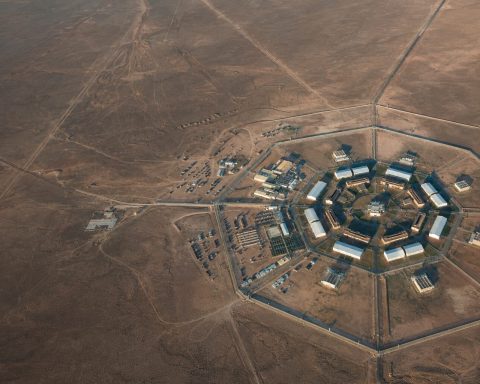
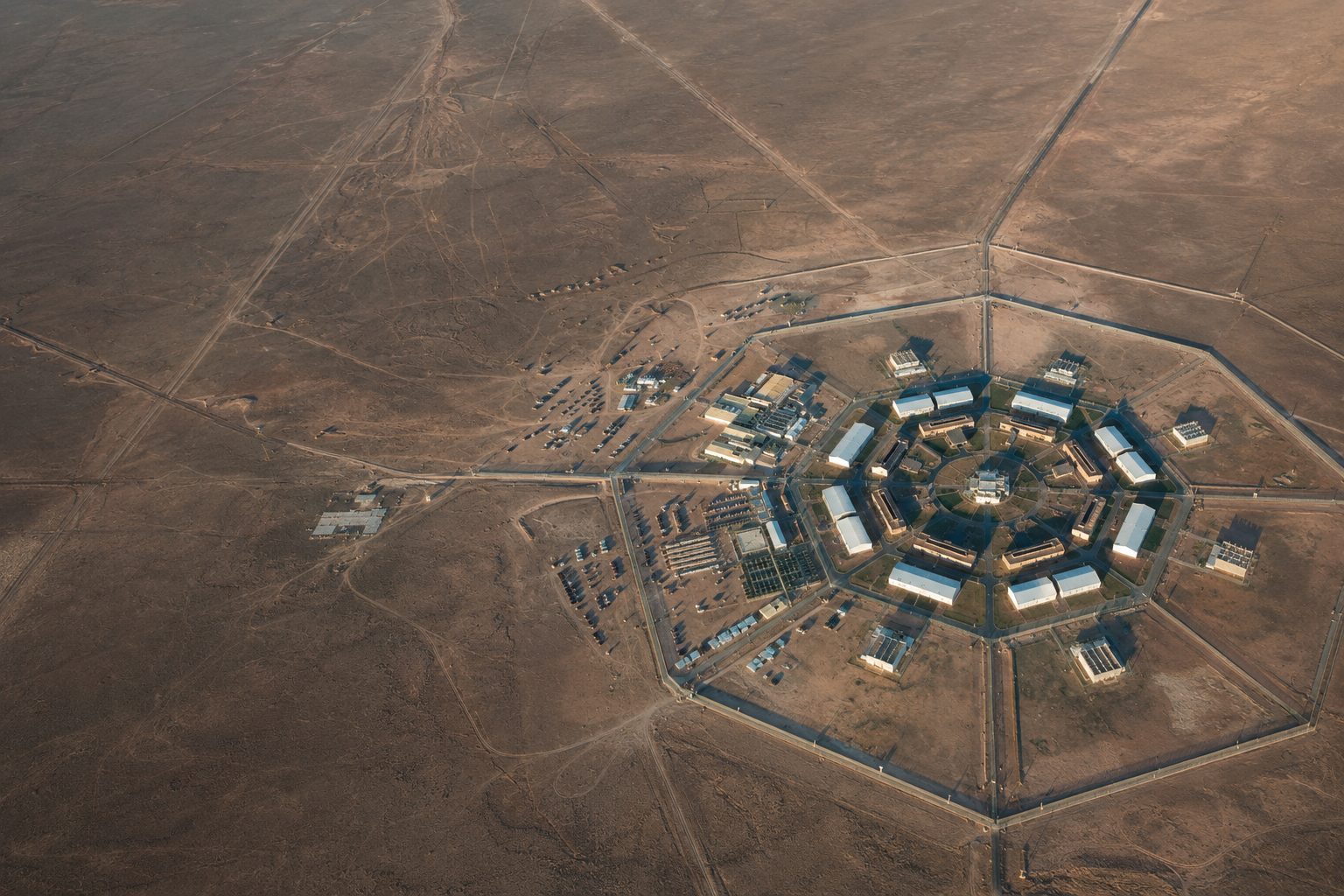
Reuters reported that two octagon-shaped sites in eastern Xinjiang are connected to the Hami silo fields by a network of roads, railheads, airstrips, and fortified storage zones. Satellite images from April and May pointed to military vehicles moving around the northern installation, with temporary shelters and camouflaged trucks visible, the report noted.
Tong Zhao, senior fellow at the Carnegie Endowment for International Peace, told Reuters the octagonal structures and adjacent towers could be linked to C3— command, control and communications— which enable leaders to direct and oversee forces. He also pointed to possible roles in maintenance and storage for nuclear activities near Hami.
The Chinese defense ministry didn’t answer Reuters’ inquiries regarding the satellite data, and the Pentagon wouldn’t discuss intelligence issues. Beijing has maintained for years that its nuclear stance is strictly defensive, repeating its no-first-use doctrine—China claims it won’t initiate nuclear strikes in any conflict.
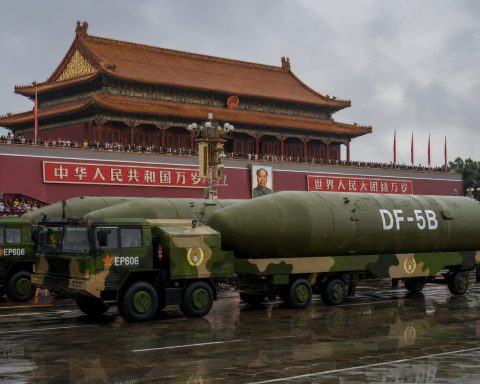
Russia and the U.S. continue to dwarf other nations in nuclear firepower. The Federation of American Scientists puts Russia’s active warheads at roughly 4,400 and the U.S. at 3,700—China, by comparison, counts around 620, Reuters reports. Still, arms-control experts and American officials note China is ramping up its arsenal at a pace no other nuclear power matches.
The Pentagon’s December report put China on pace for 1,000 nuclear warheads by 2030, noting it had probably filled over 100 solid-fuel intercontinental ballistic missile silos across three sites. Intercontinental ballistic missiles—ICBMs—are built for hitting targets continents away.
But a lot of specifics are still up in the air. Five security scholars told Reuters the infrastructure does line up with what China’s nuclear program would need, though they were quick to note that the actual weapons, deployment strategies, and the precise function of those octagon-shaped structures haven’t been pinned down. From satellite images, a conventional support system and a nuclear command network—or some mix—are nearly indistinguishable.
That uncertainty adds to the risk, according to Daniel Salisbury, senior fellow at IISS. Unlike the U.S. and Moscow during the Cold War, Washington and Beijing don’t have a history of nuclear risk dialogue—so there’s “far less to build on” if a crisis erupts. Reuters
Washington and its partners now face a tougher round of debate—missile defense, long-range strike, how to shield command sites in the Indo-Pacific all come into sharper focus with the new construction. Beijing, for its part, is expected to frame the expansion as a move to ensure survivability, not escalation. The twist: those same reinforced silos, underground command posts, and mobile launch pads might calm nerves in China but set them jangling on the other side.