

WASHINGTON, June 8, 2026, 19:03 EDT
The Federal Communications Commission’s move to extend Amazon Leo’s July satellite-deployment timeline is shining a light on a less-discussed challenge in the low-Earth-orbit sector: how operators will handle the surge of data once expanding fleets are actually up there. Instead of reducing Amazon’s authorization to satellites already in orbit, the FCC opted for a conditional waiver, according to GeekWire on Monday.
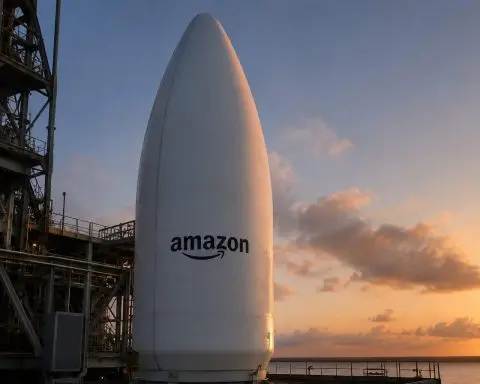
This is a crucial moment for Amazon as it pivots from just getting started to actually running its network. Next up: the company’s Ariane 6 launch—scheduled for June 17 in French Guiana—should see 36 Amazon Leo satellites head to orbit, marking the biggest Amazon payload Arianespace has managed so far. That’ll push the total over 330 satellites already up. “Each extra satellite accelerates the pace,” said Melissa Wuerl, director of launch systems for Amazon Leo. Arianespace CEO David Cavaillolès described this as the duo’s “most ambitious launch together yet.” Amazon News
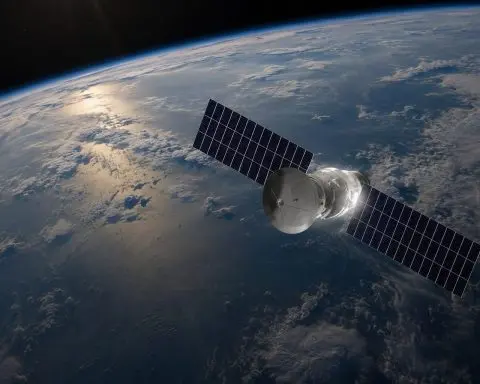
Low Earth orbit, or LEO, means satellites are flying near enough to the surface that signal lag drops compared with those in higher orbits. According to SpaceNews, in its recent piece on the “cardinality wall,” satellite operators are now running into a bottleneck not only with launches but also—and maybe more so—down here on the ground. The surge of thousands of satellites relying on real-time telemetry is straining ground infrastructure, the report said. LinkedIn
Cardinality, in database lingo, refers to how many distinct data series need monitoring. For satellites, that includes not just spacecraft IDs but things like subsystem tags, orbit paths, mission phases, software versions—the list builds fast, each label tied to time-stamped telemetry. InfluxData notes that as these dimensions stack up across growing fleets, standard ground databases often hit limits.
The FCC’s order puts scale front and center. Under Amazon Leo’s Gen1 approval—originally for 3,236 satellites, later trimmed to 3,232—the company has to get 1,616 satellites up by July 30, 2026, with the rest in orbit by July 30, 2029. That 2029 finish line stays, but satellites that miss the July mid-point won’t keep their early-round spectrum priority, at least for now.
Starlink, the satellite arm of SpaceX, is still setting the standard. Oppenheimer analysts, cited by Reuters last week, say Starlink is putting the $1.6 trillion U.S. communications sector under pressure as it grows. The SpaceX valuation? Anchored by its satellite broadband unit, now with 10 million-plus subscribers.
Eutelsat OneWeb stands out among major LEO operators for the scale of its data pipeline. According to InfluxData, the company runs a fleet of over 600 LEO satellites, each pushing out more than 50,000 telemetry values—altogether, that’s upwards of 1 million data points every second spread over 15 million unique series. “Measure everything,” is how Dan Kroboth, vice president of LEO satellite operations, described the company’s approach. InfluxData
Loft Orbital’s approach, spotlighted in the SpaceNews piece via InfluxData’s Ian Clark, underscores the industry’s move away from fully custom missions and toward reusable space infrastructure. According to InfluxData, Loft relies on Telegraf, InfluxDB, and Google Cloud for gathering and storing telemetry—covering both in-orbit equipment and ground-side servers and containers. Caleb MacLachlan, senior spacecraft operations software engineer at Loft, noted the proof-of-concept phase took “less than a day.” InfluxData
The solution isn’t just scaling up to a larger database. Cost-saving tricks like filtering, compressing, or downsampling data are on the table for operators, though those moves can erase the context crucial for catching a weak battery, thermal drift, or early-stage software faults—issues you want to flag long before they put a spacecraft at risk.
Companies making telemetry systems a central part of their infrastructure—rather than treating them like just another back-office fix—could come out ahead. Sure, it’s the launch numbers that grab attention. The tricky part? Once those satellites are up, the real test is whether the ground segment can handle all that incoming data.