
WASHINGTON, May 26, 2026, 15:00 EDT
- SpaceX launched 24 more Starlink satellites on May 26—just one day after sending up 29—putting continued strain on ground-based monitoring systems tracking the swelling low-Earth-orbit constellations.
- Getting satellites into orbit is just one hurdle. The real challenge: can operators move quickly on telemetry—standard health and status readings—to catch issues and respond in time?
- Amazon Leo and Telesat, among others, are ramping up or getting ready to launch their own LEO networks—broadening the industry’s operational trial.
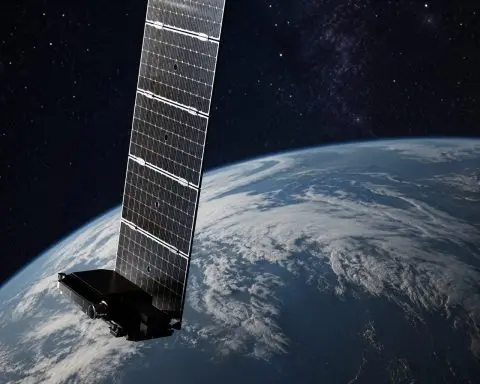
On Tuesday, SpaceX launched 24 additional Starlink satellites from Vandenberg Space Force Base, following a 29-satellite mission out of Cape Canaveral the previous day. The pace is turning up the spotlight on a less discussed choke point for the expanding satellite fleet: handling the torrent of data each unit beams down to Earth.
Timing is critical here. In Low Earth orbit (LEO), satellite networks are scaling up from just dozens to literally thousands of spacecraft, each one churning out telemetry on things like battery health, heat levels, position, software status, and link quality. Operators aren’t just dealing with a flood of raw data—they’re also facing a spike in the variety of data streams that need to be recorded, searched, and decoded.
In a May 20 piece for SpaceNews, Ian Clark of InfluxData called this challenge the “cardinality wall”—that’s when a ground-system database gets swamped by sheer numbers of unique, time-stamped data streams. Cardinality basically refers to the count of different series a database manages, like an individual sensor on a given satellite running in a specific mission mode. Copernical
InfluxData, referencing the SpaceNews piece, pointed out that today’s aerospace telemetry includes a long list of metadata—think spacecraft ID, subsystem, orbit segment, mission phase, software configuration. Layer that across an entire fleet and, as the company put it, traditional databases start to “struggle under the weight of exploding cardinality.” LinkedIn
Starlink stands out as SpaceX’s biggest play on scale. On Monday, Spaceflight Now reported that the Starlink 10-47 launch tacked on 29 V2 Mini Optimized satellites, swelling the megaconstellation past 10,000 units. That marked SpaceX’s 60th orbital flight this year. Then on Tuesday, Starlink 17-37 pushed the total higher, with another 24 satellites joining the fleet.
Amazon Leo—previously known as Project Kuiper—has also ramped up activity. The company reported 11 missions completed by its LEO network so far, with over 300 satellites launched during its first year of operations and more than 100 future launches already locked in. Up next: an Atlas V rocket carrying 29 satellites is scheduled to launch from Cape Canaveral on May 29.
In a company post, Rajeev Badyal, vice president at Amazon Leo, pointed out that using heavier launch vehicles “allow us to deploy more satellites per mission.” He said that should speed up how quickly customers get service. But there’s a flip side: launching more satellites at once means there’s also more hardware to bring online, track, and integrate into their control systems. LinkedIn
Telesat offers fresh evidence the satellite market’s scope is stretching past SpaceX and Amazon. According to Reuters on Tuesday, the Canadian company has been in early discussions with Italy about secure satellite connectivity, with intentions to put 150 to 200 LEO satellites into orbit starting this year, targeting commercial and defense customers.
Smaller fleet operators know these operational challenges well. During an InfluxData webinar, Caleb MacLachlan, senior spacecraft operations software engineer at Loft Orbital, described handling nearly 10 million measurements in just a 10-minute spacecraft contact. That level of throughput, he said, demands a system that’s “very low latency and performant.” InfluxData
MacLachlan flagged another risk: sloppy data tagging. “Series cardinality goes up like crazy,” he pointed out. “That’s what really kills the performance of an Influx database.” InfluxData
The suggested solutions aren’t flashy: break up telemetry pipelines to keep a single chokepoint from spreading trouble, move to databases that actually handle time-series workloads, and hold onto enough metadata for spotting oddities—but skip the kind of exhaustive tagging that bogs everything down. InfluxData’s take? The companies finding traction are overhauling telemetry setups entirely, not fussing with minor tweaks.
But there’s a real chance operators go too far the other way. Strip out too much data and engineers could miss underlying patterns that tip off a failing part; leave everything in, and suddenly storage, query speeds, and costs start stacking up fast. Launch frequency throws another wrench in the works: FAA Administrator Bryan Bedford noted last week that SpaceX’s ambition for a sharp increase in launches means reliability has to step up as well. “We need to see a lot more reliability,” he told reporters. Reuters
At this point, the “cardinality wall” is largely trouble for operations teams—not something end users are noticing yet. That could shift fast if an undetected anomaly, sluggish query, or lagging response time flips a backend snag into an actual outage. Rockets still draw the spotlight in the LEO race, but behind the scenes, it’s mission-control data systems that could end up determining who truly scales.