
PASADENA, California, May 31, 2026, 15:02 PDT
NASA’s Perseverance rover is nearly at a Martian marathon, with the agency’s public activity log still showing a steady stream of images as the team navigates the rover into older ground past Jezero Crater. Reuters, referencing mission manager Robert Hogg, noted Perseverance had tallied 26.09 miles—41.99 km—just short of the marathon’s 26.22-mile threshold. Hogg expects the rover to cross that mark within a month.
Location is key for the rover right now, not the miles it’s logged. Perseverance has pushed beyond Jezero Crater, entering terrain NASA calls some of the most scientifically valuable on Mars to date. Here, the rocks could actually be older than the crater itself, possibly holding evidence from the planet’s primordial crust.
The mission lands at a crossroads—timely, yet not without its complications. Perseverance continues to gather rock and soil samples, eyeing a potential trip back to Earth. But NASA’s fiscal 2026 budget language signals the agency plans to pull the plug on Mars Sample Return, the effort designed to retrieve those tubes.
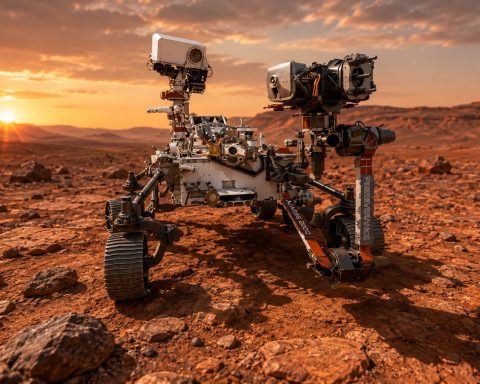
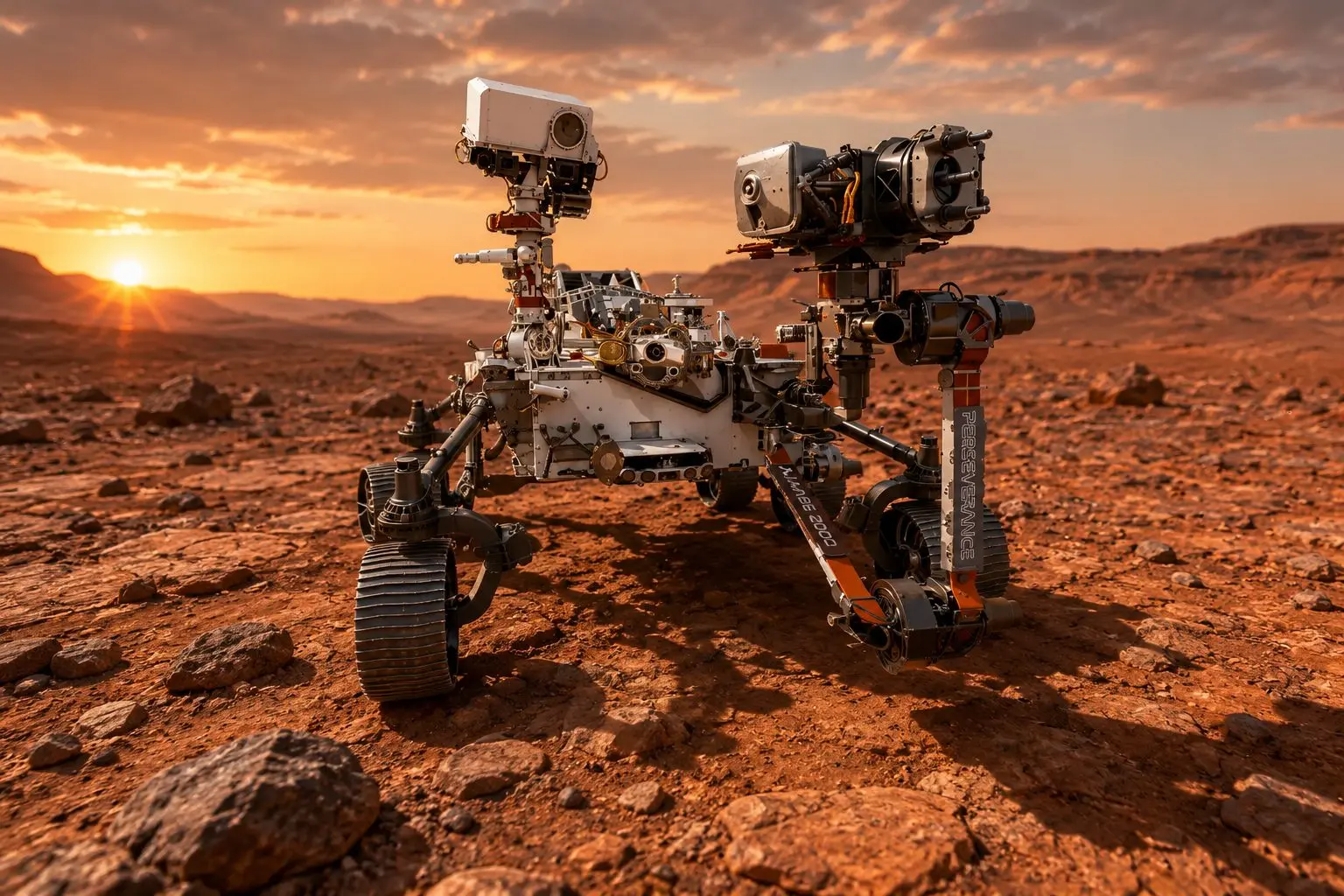
NASA’s raw-image page has picked a shot from Perseverance’s Mastcam-Z for its May 24-30 image-of-the-week. Captured on May 26, or Sol 1871—a Martian day number—the photo came from Mastcam-Z, the dual cameras set atop the rover’s mast.
Perseverance touched down on Feb. 18, 2021, its primary task: hunt for evidence of ancient microbial life and gather Martian rock and regolith—broken stone, loose soil—potentially for retrieval by a later mission. NASA continues to classify the rover as active at Jezero, a crater stretching 28 miles across and shaped long ago by water and river channels, dating back over 3.5 billion years.
Katie Stack Morgan, the project scientist for Perseverance at NASA’s Jet Propulsion Laboratory, described the rover as being out in the “Wild West” past Jezero’s rim when it snapped its latest selfie—the farthest west it’s traveled since touching down. Right before that, Perseverance had abraded a rock outcrop, scraping the surface to give its instruments a look inside. According to NASA, this rock holds igneous minerals—those that form as molten magma cools—which likely date to before Jezero Crater existed. NASA
Ken Farley, deputy project scientist for Perseverance at Caltech, described the Arbot-area panorama as revealing “likely the oldest rocks we are going to investigate during this mission.” According to NASA, some of the rocks in that region look to be ancient lava formations and impactites—rocks formed or altered by meteorite strikes—dating back roughly 4 billion years. NASA
NASA’s previous analyses in Jezero turned up a possible biosignature—something that might suggest ancient life, though not conclusive—pulled from the “Sapphire Canyon” sample in a rock dubbed “Cheyava Falls.” The agency maintains these hints aren’t enough; more evidence or detailed research is required before saying anything definitive about life. NASA Science
Perseverance isn’t the only active rover on Mars, but it’s now charting a path through a far older era. Over in Gale Crater, NASA says Curiosity sits 2,345 miles off, making its ascent on younger slopes of Mount Sharp. Meanwhile, Perseverance keeps pushing across what NASA in April called some of the oldest terrain anywhere in the solar system.
NASA’s Opportunity rover still holds the distance record at 28.06 miles from its 2004–2019 run. Curiosity logged 22.93 miles, according to Reuters. Perseverance’s Ingenuity helicopter notched 72 flights—a pioneering milestone for powered flight beyond Earth—before wrapping up its mission.
NASA isn’t the only one feeling the heat. China’s Tianwen-3 is targeting a 2028 launch, with plans to bring back Martian samples by 2031, according to materials from the Chinese state information office released in April. That puts Mars sample return squarely at the intersection of science and geopolitics.
The risk is hard to ignore. Perseverance is able to drill, seal, and stash away promising samples, but the crucial analyses will likely need to happen back on Earth. NASA’s Mars Sample Return page still touts the potential for these samples to reshape our knowledge of Mars. Even so, the funding to actually bring them home remains uncertain—and Perseverance’s excellent condition alone isn’t enough to change that.
For the moment, the rover is still rolling along. “Perseverance is in great shape as we continue our explorations and extend into ultramarathon drive distances,” Steve Lee, acting Perseverance project manager at JPL, said in NASA’s May update. NASA